


Acetohydroxamic Acid
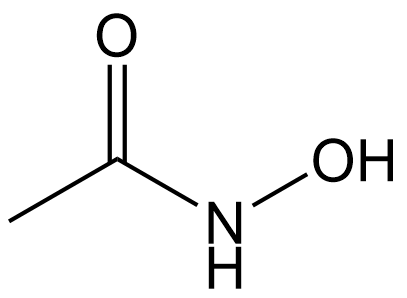
Acetohydroxamic acid (AHA, CAS No. 546-88-3) is an irreversible urease inhibitor and a hydroxyurea derivative that targets bacterial and plant ureases. It is mainly used in research on chronic urinary tract infections, urease-related stones (struvite, magnesium ammonium phosphate stones), and Helicobacter pylori infection. AHA can also inhibit arachidonic acid 5‑lipoxygenase, reduce the formation of advanced glycation end products (AGEs), scavenge free radicals, and shows antiviral activity against HIV as well as antioxidant and anti-inflammatory effects.
In vitro, AHA can inhibit the formation of struvite crystals by Proteus mirabilis in artificial urine and inhibit the growth of H. pylori (MIC for different strains approximately 200–400 mg/L). In cell-based experiments, AHA (approximately 7 mM, incubated for 24 h) can enter bacterial cells, inhibit H. pylori urease activity, and reduce its adhesion to gastric tissue, thereby exerting antibacterial effects. AHA can also significantly reduce AGE formation under conditions of 2.5–5 mM for 10–14 days, scavenge DPPH and hydroxyl radicals within the range of 6 μM–50 mM for 30 min, and noncompetitively inhibit semicarbazide-sensitive amine oxidase (SSAO) under conditions of 0–50 μM for 1 min.
In canine models, long-term administration of AHA dose-dependently reduces urinary urease activity, pH, and crystallization, and significantly inhibits bladder stone formation; in P. mirabilis-associated urinary stone models, it can promote stone dissolution and reduce recurrence. In a Mongolian gerbil model of H. pylori gastritis, administration of AHA (reported dose approximately 2500 ppm/animal in feed) can markedly reduce the severity of gastritis and the gastric bacterial load. AHA-containing formulations have been used in therapeutic studies of chronic urinary tract infections associated with urease-positive bacteria and magnesium ammonium phosphate stones, and AHA is an important tool compound for exploring urease-targeted therapy, antioxidant/anti-inflammatory effects, and anti-HIV mechanisms.
References:
[1] FISHBEIN WN, CARBONE PP. UREASE CATALYSIS. II. INHIBITION OF THE ENZYME BY HYDROXYUREA, HYDROXYLAMINE, AND ACETOHYDROXAMIC ACID. J Biol Chem. 1965 Jun;240:2407-14. PMID: 14304845.
[2] Krawiec DR, Osborne CA, Leininger JR, Griffith DP. Effect of acetohydroxamic acid on dissolution of canine struvite uroliths. Am J Vet Res. 1984 Jul;45(7):1266-75. PMID: 24049882.
[3] Downey JA, Nickel JC, Clapham L, McLean RJ. In vitro inhibition of struvite crystal growth by acetohydroxamic acid. Br J Urol. 1992 Oct;70(4):355-9. doi: 10.1111/j.1464-410x.1992.tb15787.x. PMID: 1450840.
[4] Phillips K, Munster DJ, Allardyce RA, Bagshaw PF. Antibacterial action of the urease inhibitor acetohydroxamic acid on Helicobacter pylori. J Clin Pathol. 1993 Apr;46(4):372-3. doi: 10.1136/jcp.46.4.372. PMID: 8496397; PMCID: PMC501224.
[5] Ohta T, Shibata H, Kawamori T, Iimuro M, Sugimura T, Wakabayashi K. Marked reduction of Helicobacter pylori-induced gastritis by urease inhibitors, acetohydroxamic acid and flurofamide, in Mongolian gerbils. Biochem Biophys Res Commun. 2001 Jul 20;285(3):728-33. doi: 10.1006/bbrc.2001.5229. PMID: 11453654.
[6] Umamaheshwari RB, Jain NK. Receptor-mediated targeting of lipobeads bearing acetohydroxamic acid for eradication of Helicobacter pylori. J Control Release. 2004 Sep 14;99(1):27-40. doi: 10.1016/j.jconrel.2004.06.006. PMID: 15342178.
[7] Sharma M, Sharma NN, Bhalla TC. Biotransformation of Acetamide to Acetohydroxamic Acid at Bench Scale Using Acyl Transferase Activity of Amidase of Geobacillus pallidus BTP-5x MTCC 9225. Indian J Microbiol. 2012 Mar;52(1):76-82. doi: 10.1007/s12088-011-0211-5. Epub 2011 Aug 11. PMID: 23449317; PMCID: PMC3298591.
[8] Liu YH, Lu YL, Liu DZ, Hou WC. Antiglycation, radical scavenging, and semicarbazide-sensitive amine oxidase inhibitory activities of acetohydroxamic acid in vitro. Drug Des Devel Ther. 2017 Jul 13;11:2139-2147. doi: 10.2147/DDDT.S141740. PMID: 28761331; PMCID: PMC5516777.
| Storage | Store at -20°C |
| M.Wt | 75.07 |
| Cas No. | 546-88-3 |
| Formula | C2H5NO2 |
| Synonyms | AHA, N-Acetylhydroxylamine, N-Hydroxyacetamide |
| Chemical Name | N-hydroxyacetamide |
| Canonical SMILES | O=C(NO)C |
| Shipping Condition | Small Molecules with Blue Ice, Modified Nucleotides with Dry Ice. |
| General tips | We do not recommend long-term storage for the solution, please use it up soon. |