


Acetoacetate Colorimetric Assay Kit
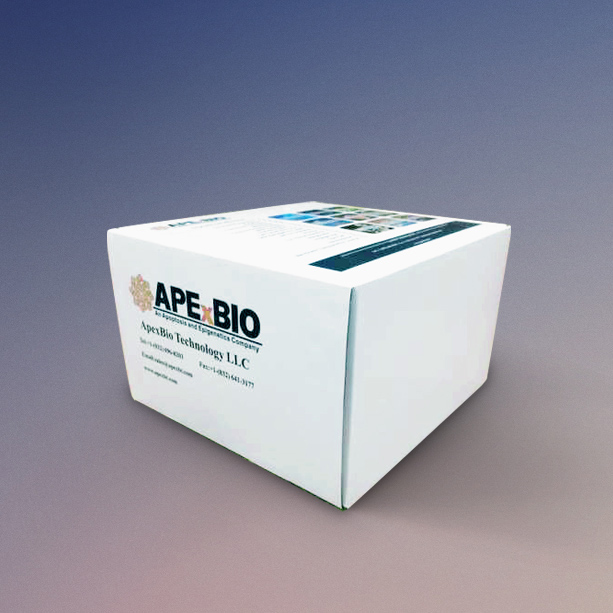





Acetoacetate (AcAc), a β‑ketoacid, is one of the three ketone bodies and is formed via condensation of two molecules of acetyl‑CoA in liver mitochondria. AcAc can be enzymatically reduced to 3‑β‑hydroxybutyrate (β‑HB), or decarboxylated producing acetone (CH3)2CO. Ketone bodies (β‑HB: 78%; AcAc: 20%; (CH3)2CO: 2%) are mainly used as an alternative energy source when glucose cannot be delivered to the system. Excessive concentration of ketone bodies (ketoacidosis) is observed in patients with Type I diabetes, severe starvation or alcoholism. Traditionally, AcAc levels can be qualitatively detected using dipsticks that use sodium nitroferricyanide as a chromophore.
This Acetoacetate Colorimetric Assay Kit adapts the above principle with modifications to provide a sensitive method to quantitate endogenous levels of AcAc in human urine. In this nonenzymatic assay, AcAc reacts with a substrate to yield a colored product that can be measured at 550 nm. The assay is specific for AcAc and does not detect β‑HB. The kit can detect as low as 25 µM acetoacetate.
|
Components |
100 Assays |
Storage |
|
Acetoacetate Assay Buffer |
15 mL |
-20°C |
|
Acetoacetate Standard |
1 vial |
-20°C |
|
Acetoacetate Substrate |
1 mL |
-20°C away from light |
|
Shipping: Blue ice |
||
| Features | Specific for acetoacetate and does not detect 3-β-hydroxybutyrate; The assay can detect less than 25 µM of acetoacetate in various sample types. |
| Shipping | Blue Ice |