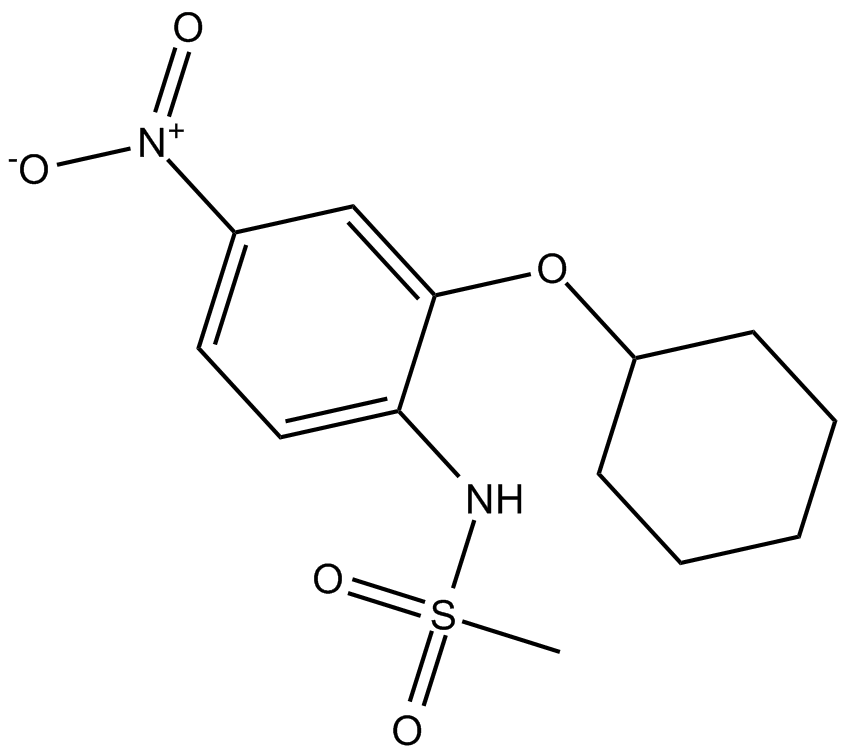


Acetaminophen
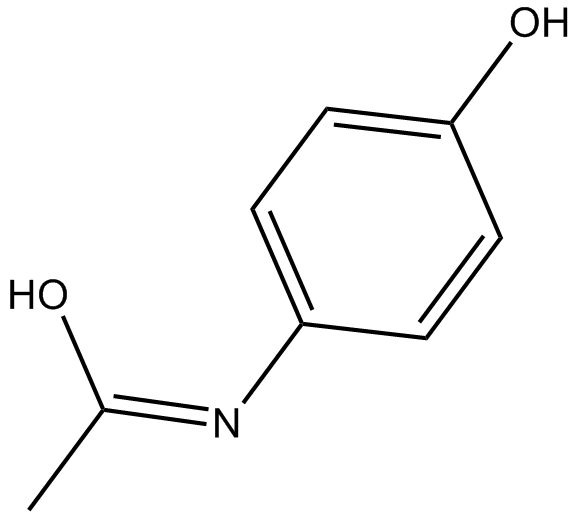
Acetaminophen (Paracetamol/Acetaminophen; CAS 103-90-2) is a COX inhibitor that selectively inhibits cyclooxygenase-2 (COX-2) with an IC50 of 25.8 micromol/L, and is also a widely used antipyretic and analgesic drug[1]. Paracetamol (50 mM) significantly reduces cell viability, but co-treatment with HV110 increases cell viability[2]. Paracetamol (250 mg/kg) reduces glutathione levels and glutathione peroxidase activity in mice and induces cell death and hypertrophy in primary mouse hepatocytes; the ferroptosis inhibitor ferrostatin-1 blocks this effect[2]. Paracetamol has analgesic and antipyretic effects in animal models.
[1]. Hinz, B, et al. Acetaminophen (paracetamol) is a selective cyclooxygenase-2 inhibitor in man, 2008, 22(2): 383-90.
[2]. Dini M, et al. Lactobacillus fermentum Postbiotic-induced Autophagy as Potential Approach for Treatment ofAcetaminophen Hepatotoxicity. Front Microbiol, 2017, 8: 594.
[3]. Lorincz T, Jemnitz K, Kardon T, et al. Ferroptosis is Involved in Acetaminophen Induced Cell Death. Pathology & Oncology Research, 2015, 21(4): 1115-1121.
High-dose administration of acetaminophen can induce centrilobular hepatic necrosis and is commonly used to establish drug-induced liver injury animal models, widely used for hepatoprotective drug evaluation.
| Physical Appearance | A solid |
| Storage | Store at -20°C |
| M.Wt | 151.16 |
| Cas No. | 103-90-2 |
| Formula | C8H9NO2 |
| Solubility | insoluble in H2O; ≥29.4 mg/mL in EtOH; ≥7.56 mg/mL in DMSO |
| Chemical Name | (Z)-N-(4-hydroxyphenyl)acetimidic acid |
| Canonical SMILES | C/C(\O)=N/c(cc1)ccc1O |
| Shipping Condition | Small Molecules with Blue Ice, Modified Nucleotides with Dry Ice. |
| General tips | We do not recommend long-term storage for the solution, please use it up soon. |
Quality Control & MSDS
- View current batch:
Chemical structure

Related Biological Data