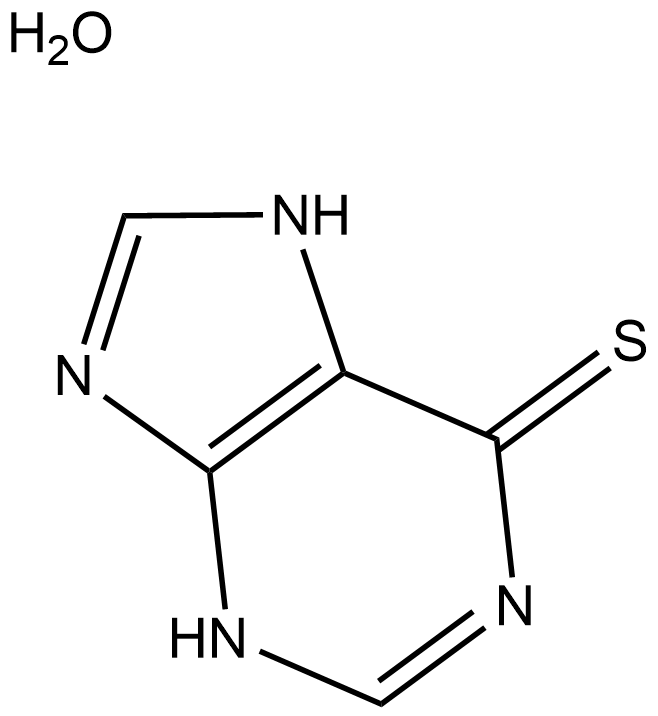
6-Mercaptopurine hydrate
6-Mercaptopurine hydrate (CAS No.: 6112-76-1) is a small-molecule antimetabolite of a synthetic purine analog, classified as a nucleoside metabolism inhibitor, and is widely used in discovery research related to nucleotide biosynthesis, cell cycle regulation, oncology, and immunology. In cellular systems, this compound can be rapidly converted to the 6-mercaptopurine ribonucleotide monophosphate form, selectively inhibiting phosphoribosyl pyrophosphate amidotransferase, the rate-limiting enzyme in the de novo purine synthesis pathway, thereby limiting the production of inosine monophosphate and downstream adenine and guanine nucleotides; it also interferes with the conversion of inosine monophosphate to adenylosuccinate and xanthosine monophosphate, reducing adenylate formation in vitro and disrupting nucleic acid synthesis. Consistent with its antimetabolic mechanism, its in vitro activity in biochemical assays is commonly observed in the nanomolar to micromolar range, while effects at low to moderate micromolar levels are typically observed in cell proliferation or viability-related experiments, depending on the cell type, experimental format, and exposure time. In research applications, it is often used as a reference control for enzymatic reactions or as a pathway probe to analyze purine metabolism and immune signaling networks; it is also used in rapidly dividing mammalian cell models (including hematopoietic lineage cells) and exploratory animal models to evaluate the effects of limited nucleotide supply on cell fate and signal transduction, with relevant concentrations or doses generally optimized according to the specific experimental design and research objectives.
| Storage | Store at -20°C |
| M.Wt | 170.19 |
| Cas No. | 6112-76-1 |
| Formula | C5H6N4OS |
| Synonyms | Mercaptopurine hydrate; 6-MP hydrate |
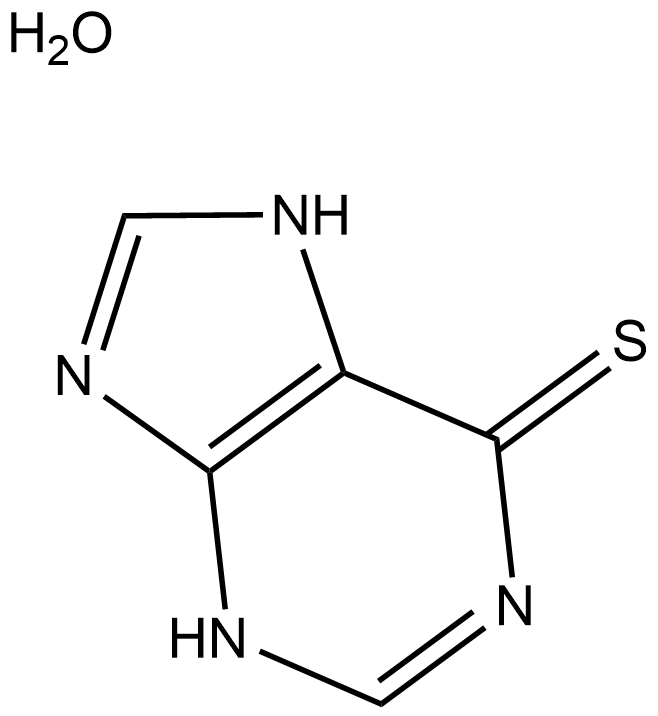
| Chemical Name | 3,7-dihydro-6H-purine-6-thione hydrate |
| Canonical SMILES | S=C1N=CNC=2N=CNC12.O |
| Shipping Condition | Small Molecules with Blue Ice, Modified Nucleotides with Dry Ice. |
| General tips | We do not recommend long-term storage for the solution, please use it up soon. |
Quality Control & MSDS
- View current batch:
Chemical structure