


6-Chloroguanineriboside
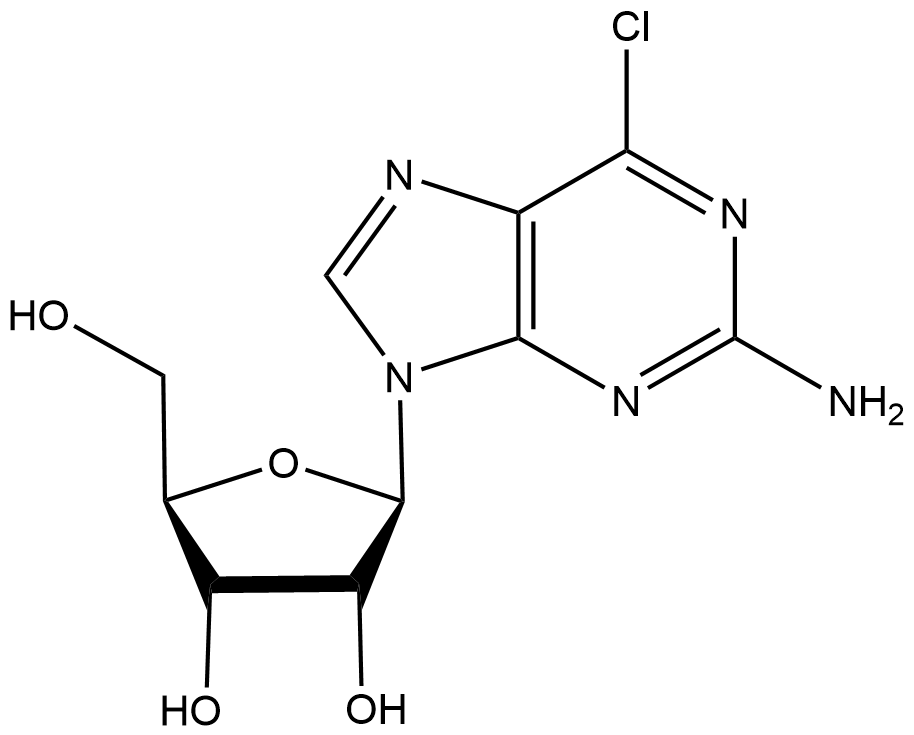
6-Chloroguanineriboside (CAS No.: 2004-07-1) is a halogenated purine nucleoside analog widely utilized as a biochemical tool in nucleoside metabolism and anticancer mechanism research. Structurally related to guanosine, this compound is classified within the broader category of purine analogs that interfere with nucleic acid synthesis and function, making it relevant for studying pathways associated with cellular proliferation and programmed cell death. Mechanistically, purine nucleoside analogs, including 6-Chloroguanineriboside, are known to disrupt DNA and RNA synthesis through incorporation into nucleic acids or inhibition of key enzymes involved in nucleotide metabolism, thereby triggering apoptosis and cell cycle arrest in proliferative cell systems. Experimental evidence indicates that this compound exhibits very low affinity for guanosine binding sites in rat brain tissue, suggesting limited interaction with endogenous guanosine receptors and highlighting its utility in selectively probing nucleoside-related biochemical processes without strong receptor-mediated effects. In vitro studies with related analogs typically demonstrate activity in the micromolar concentration range, depending on cell type and assay conditions. As a research reagent, 6-Chloroguanineriboside is commonly applied in cell-based assays to investigate nucleotide metabolism, evaluate cytotoxicity mechanisms, and screen candidate compounds targeting nucleoside pathways, with experimental concentrations tailored to specific model systems and study objectives.
| Physical Appearance | A solid |
| Storage | -20°C, away from moisture and light |
| M.Wt | 301.69 |
| Cas No. | 2004-07-1 |
| Formula | C10H12ClN5O4 |
| Solubility | ≥25.3 mg/mL in DMSO; ≥2.56 mg/mL in EtOH with gentle warming and ultrasonic; insoluble in H2O |
| Chemical Name | (2R,3R,4S,5R)-2-(2-amino-6-chloro-9H-purin-9-yl)-5-(hydroxymethyl)tetrahydrofuran-3,4-diol |
| Canonical SMILES | ClC1=NC(N)=NC2=C1N=CN2[C@@H]3O[C@H](CO)[C@@H](O)[C@H]3O |
| Shipping Condition | Small Molecules with Blue Ice, Modified Nucleotides with Dry Ice. |
| General tips | We do not recommend long-term storage for the solution, please use it up soon. |