


5,6-dihydroxy Indole
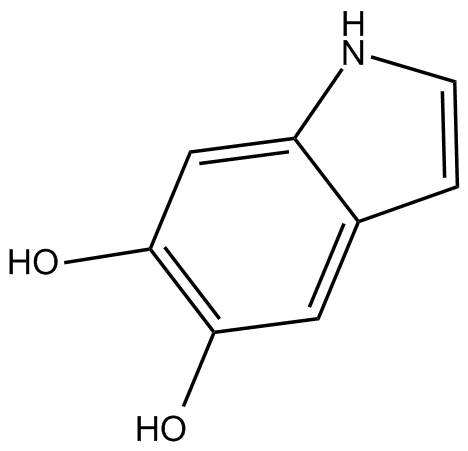





5,6-dihydroxy Indole (CAS No.: 3131-52-0) is a hydroxyindole compound that functions as a key intermediate in the melanogenesis pathway, arising from the oxidation and rearrangement of dopachrome and serving as a pivotal precursor for the biosynthesis of eumelanin and pheomelanin depending on cysteine availability. As an endogenous metabolite associated with pigment cell biology, it is widely utilized in studies investigating melanin formation, oxidative polymerization processes, and redox-regulated cellular responses. This compound exhibits broad-spectrum antimicrobial activity, including antibacterial, antifungal, antiviral, and antiparasitic effects, which are thought to be linked to its redox reactivity and capacity to generate reactive intermediates that disrupt cellular integrity and metabolic processes in pathogens. In parallel, its cytotoxic properties have made it a useful probe for examining oxidative stress-induced cell damage, mitochondrial dysfunction, and apoptosis-related pathways in vitro. Although specific molecular targets remain incompletely defined, its biological activity is generally associated with modulation of oxidative stress signaling and interference with essential biomolecular components. Reported bioactivity typically falls within the nanomolar to micromolar range depending on the biological system and assay conditions. In research settings, 5,6-dihydroxy Indole is employed in cell-based models of pigmentation disorders, antimicrobial screening platforms, and mechanistic studies of indole-derived bioactive compounds, with experimental concentrations adjusted according to assay design and desired biological endpoints.
| Physical Appearance | A solid |
| Storage | -20°C |
| M.Wt | 149.15 |
| Cas No. | 3131-52-0 |
| Formula | C8H7NO2 |
| Synonyms | Dopamine lutine |
| Solubility | insoluble in H2O; ≥15.13 mg/mL in EtOH; ≥17.3 mg/mL in DMSO |
| Chemical Name | 1H-indole-5,6-diol |
| Canonical SMILES | OC1=C(O)C=C(NC=C2)C2=C1 |
| Shipping Condition | Small Molecules with Blue Ice, Modified Nucleotides with Dry Ice. |
| General tips | We do not recommend long-term storage for the solution, please use it up soon. |