


5-(2-Hydroxyethyl)-4-methylthiazole
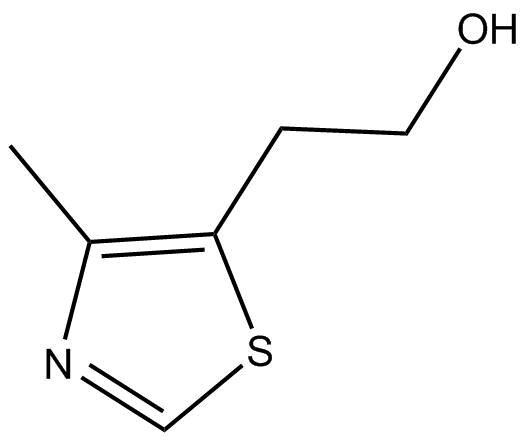
5-(2-Hydroxyethyl)-4-methylthiazole (CAS No.: 137-00-8) is a 4,5-disubstituted thiazole derivative that belongs to a class of sulfur-containing heterocycles widely investigated in chemical biology and medicinal chemistry research. Naturally occurring as a volatile component associated with complex aroma profiles, this compound has also attracted attention as a versatile small-molecule scaffold for fragment-based drug discovery and molecular optimization strategies. Its compact and functionalized structure enables its use in the design and assembly of diversified chemical libraries for screening against a broad range of biological targets, particularly in studies focused on enzyme modulation and ligand–receptor interactions where thiazole motifs are frequently represented. Although specific target engagement data for this compound are limited, analogs within the same chemical class have been reported to interact with enzymatic and redox-related pathways, typically exhibiting activity in the nanomolar to micromolar range depending on substitution patterns and assay conditions. In addition to its role in medicinal chemistry, this molecule has been utilized in materials-oriented research, including the functionalization of nanostructured systems for selective metal ion binding in aqueous environments, highlighting its utility at the interface of chemistry and biology. In experimental settings, it is commonly applied in in vitro screening platforms, fragment-based lead identification workflows, and exploratory structure–activity relationship studies, with concentrations adjusted according to assay requirements and research objectives.
| Physical Appearance | Liquid |
| Storage | -20°C |
| M.Wt | 143.21 |
| Cas No. | 137-00-8 |
| Formula | C6H9NOS |
| Solubility | ≥103.6 mg/mL in DMSO; ≥153.4 mg/mL in EtOH; ≥60.9 mg/mL in H2O |
| Chemical Name | 2-(4-methylthiazol-5-yl)ethan-1-ol |
| Canonical SMILES | CC1=C(CCO)SC=N1 |
| Shipping Condition | Small Molecules with Blue Ice, Modified Nucleotides with Dry Ice. |
| General tips | We do not recommend long-term storage for the solution, please use it up soon. |