


4-Methoxyphenylacetic acid
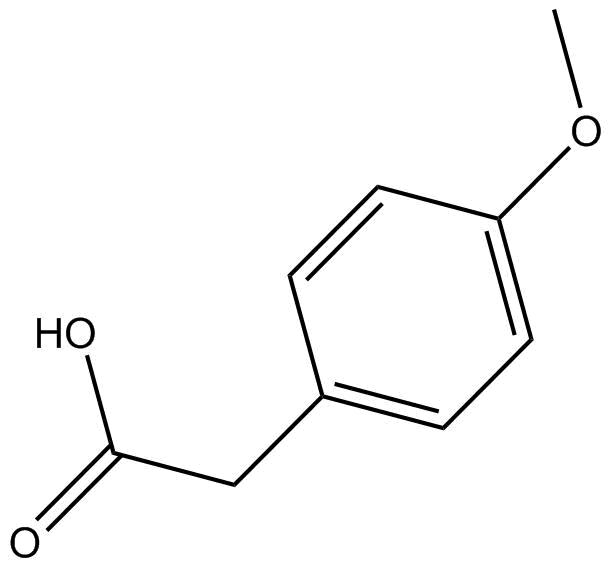
4-Methoxyphenylacetic acid (CAS No.: 104-01-8) is an aromatic metabolite identified through metabolomics analyses as a tumor-associated component in plasma, belonging to the class of phenylacetic acid derivatives that arise from endogenous and microbiota-influenced metabolic processes. Accumulating evidence indicates that alterations in its circulating levels are strongly associated with non-small cell lung cancer (NSCLC), where it demonstrates high sensitivity and specificity as a discriminative biomarker between affected individuals and healthy controls, suggesting its involvement in disease-related metabolic reprogramming. Although its precise molecular targets and signaling pathways remain to be fully elucidated, it is considered to participate in pathways linked to aromatic amino acid metabolism and host–microbiome interactions, which are increasingly recognized as critical contributors to cancer-associated metabolic phenotypes. In vitro and translational studies typically employ this compound in qualitative and quantitative metabolomic profiling rather than as a direct modulator of defined protein targets, and thus activity metrics are generally reported in the context of concentration-dependent detection within low micromolar to sub-micromolar ranges in biological samples. This compound is widely used in biomarker discovery, validation studies, and comparative metabolic analyses across cell-based systems and animal models, where experimental concentrations or dosing strategies are determined by specific analytical platforms and study objectives, supporting its utility in elucidating metabolic signatures and mechanisms underlying oncological conditions.
| Physical Appearance | Solid |
| Storage | -20°C |
| M.Wt | 166.17 |
| Cas No. | 104-01-8 |
| Formula | C9H10O3 |
| Solubility | insoluble in H2O; ≥43.6 mg/mL in EtOH; ≥49.5 mg/mL in DMSO |
| Chemical Name | 2-(4-methoxyphenyl)acetic acid |
| Canonical SMILES | O=C(O)CC1=CC=C(OC)C=C1 |
| Shipping Condition | Small Molecules with Blue Ice, Modified Nucleotides with Dry Ice. |
| General tips | We do not recommend long-term storage for the solution, please use it up soon. |