


4-Hydroxyphenylpyruvic acid
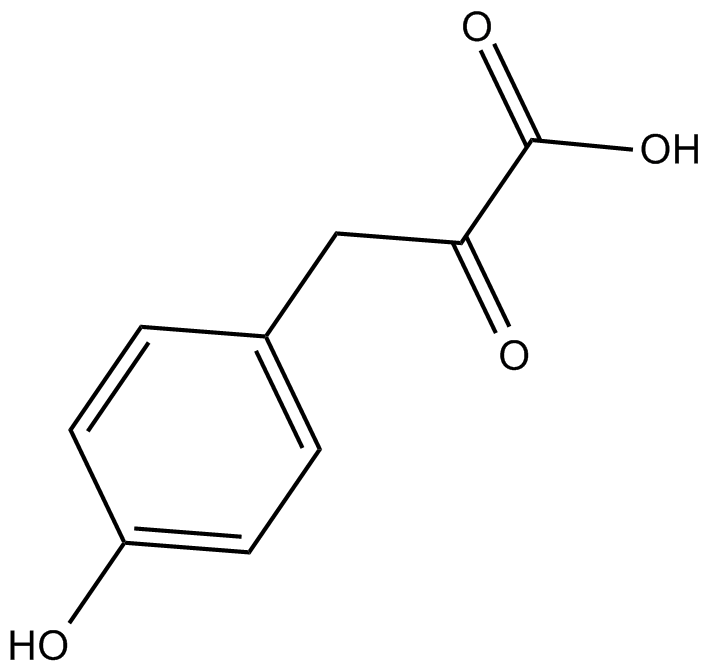
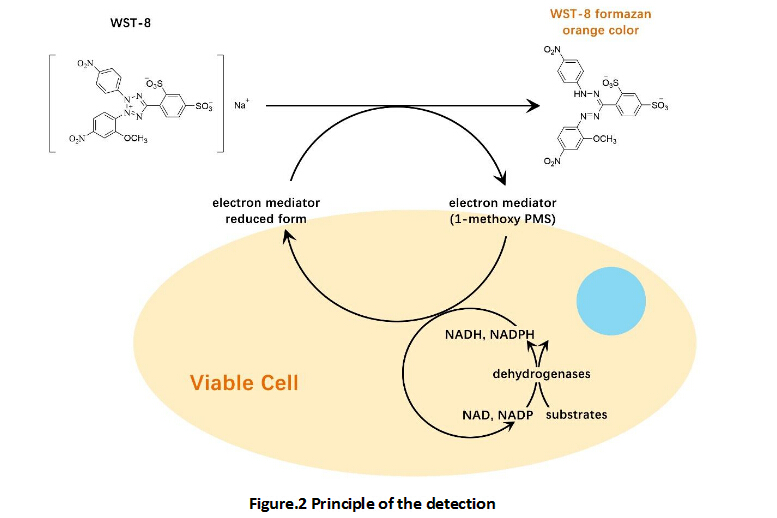
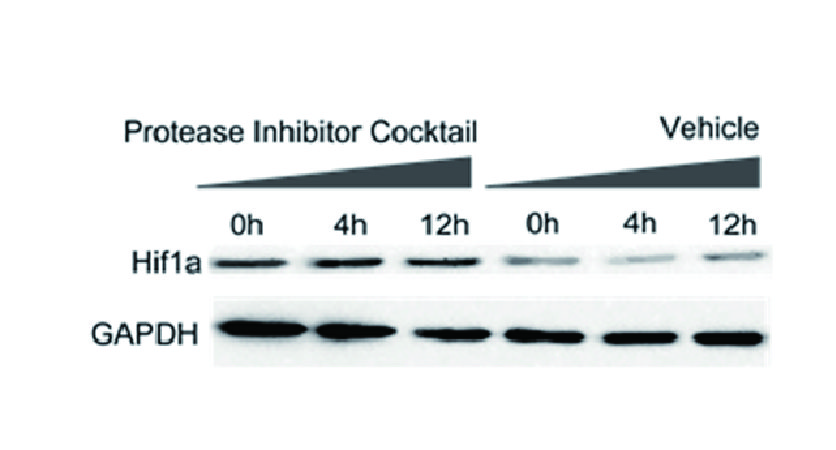
4-Hydroxyphenylpyruvic acid (CAS No.: 156-39-8) is an endogenous phenylpyruvic acid derivative that functions as a key metabolic intermediate in the catabolism of aromatic amino acids, particularly L-tyrosine and L-phenylalanine, and serves as a direct substrate of 4-hydroxyphenylpyruvate dioxygenase in the biosynthetic conversion to homogentisic acid. As part of this pathway, it plays an important role in cellular metabolic homeostasis and is widely utilized in biochemical and pharmacological studies investigating disorders of tyrosine metabolism, including type III tyrosinemia, hawkinsinuria, and alkaptonuria, where altered levels of this metabolite are observed. Mechanistically, 4-hydroxyphenylpyruvic acid has been reported to modulate inflammatory and oxidative stress responses, including inhibition of lipopolysaccharide-induced interleukin-6 and nitric oxide production in macrophage models and reduction of mitochondrial superoxide generation in endothelial cells, with activity observed in the low millimolar range. In addition, it has demonstrated protective effects in preclinical models of physiological stress, such as improved survival in hemorrhagic shock models, suggesting broader relevance to redox biology and cellular stress signaling pathways. This compound is commonly applied in in vitro cell-based assays and in vivo metabolic or disease models to probe enzyme function, pathway flux, and metabolic dysregulation, with experimental concentrations or dosing regimens tailored to specific study designs in drug discovery and translational research contexts.
| Physical Appearance | A solid |
| Storage | -20°C |
| M.Wt | 180.16 |
| Cas No. | 156-39-8 |
| Formula | C9H8O4 |
| Synonyms | HPPA; 3-(4-Hydroxyphenyl)pyruvic Acid; p -4-Hydroxyphenylpyruvic Acid; para -4-Hydroxyphenylpyruvic Acid; NSC 100738; NSC 666757 |
| Solubility | insoluble in H2O; ≥27.35 mg/mL in EtOH; ≥55.2 mg/mL in DMSO |
| Chemical Name | 3-(4-hydroxyphenyl)-2-oxopropanoic acid |
| Canonical SMILES | OC1=CC=C(CC(C(O)=O)=O)C=C1 |
| Shipping Condition | Small Molecules with Blue Ice, Modified Nucleotides with Dry Ice. |
| General tips | We do not recommend long-term storage for the solution, please use it up soon. |