


4-Chlorophenylacetic acid
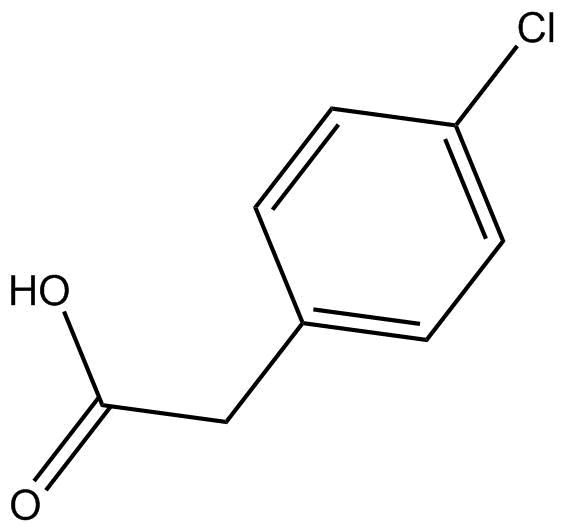
4-Chlorophenylacetic acid (CAS No.: 1878-66-6) is a halogenated aromatic fatty acid derivative widely utilized as a small-molecule probe in biochemical and cellular research. It is characterized as an aromatase inhibitor that modulates estrogen biosynthesis and interferes with estrogen receptor–mediated signaling pathways, making it a relevant tool for investigating hormone-dependent signaling networks and enzyme regulation in cancer biology. Experimental studies indicate that it can influence key cellular processes through enzyme activity modulation and pathway-specific inhibition, with reported bioactivity typically observed in the nanomolar to micromolar range depending on the assay system. In addition to its role in mammalian cell-based studies, this compound is also employed in microbiological research, where it serves as a carbon and energy source for certain bacterial strains such as Pseudomonas species, supporting investigations into microbial metabolism and biodegradation pathways. It is commonly applied in in vitro cell culture systems and preclinical experimental models to explore mechanisms of tumorigenesis, endocrine regulation, and metabolic adaptation, with working concentrations or dosing regimens varying according to specific experimental designs and research objectives.
| Physical Appearance | A solid |
| Storage | -20°C |
| M.Wt | 170.59 |
| Cas No. | 1878-66-6 |
| Formula | C8H7ClO2 |
| Solubility | ≥2.06 mg/mL in H2O; ≥38.2 mg/mL in EtOH; ≥43.4 mg/mL in DMSO |
| Chemical Name | 2-(4-chlorophenyl)acetic acid |
| Canonical SMILES | ClC1=CC=C(CC(O)=O)C=C1 |
| Shipping Condition | Small Molecules with Blue Ice, Modified Nucleotides with Dry Ice. |
| General tips | We do not recommend long-term storage for the solution, please use it up soon. |