


3-Pyridinemethanol
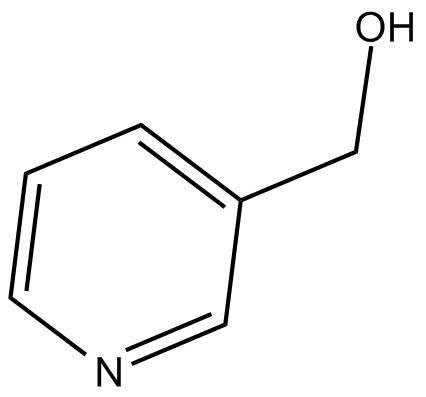





3-Pyridinemethanol (CAS No.: 100-55-0) is a pyridine-derived small molecule widely utilized in biochemical and pharmacological research as a functional analog of nicotinic acid and a precursor in vitamin B3-related metabolic pathways. This compound exhibits bioactivity associated with modulation of lipid metabolism, where it is reported to influence cholesterol homeostasis through mechanisms that may involve interference with enzyme activity and regulation of signaling pathways linked to lipid biosynthesis and transport. In addition, its structural relationship to nicotinic acid underlies its capacity to induce peripheral vasodilation, providing a useful tool for investigating vascular responses and associated signaling cascades in experimental systems. In vitro studies suggest that its biological effects typically occur within low micromolar to millimolar concentration ranges, depending on the cellular context and assay design. 3-Pyridinemethanol is also subject to selective oxidation to yield vitamin B3, making it relevant for studies of redox metabolism and cofactor biosynthesis. Consequently, it is frequently employed in cell-based assays and preclinical models to explore lipid regulatory mechanisms, vascular biology, and metabolic pathway modulation, with dosing and exposure conditions tailored to specific experimental objectives.
| Physical Appearance | A liquid |
| Storage | -20°C |
| M.Wt | 109.13 |
| Cas No. | 100-55-0 |
| Formula | C6H7NO |
| Solubility | ≥50.7 mg/mL in EtOH; ≥55.4 mg/mL in H2O; ≥58.1 mg/mL in DMSO |
| Chemical Name | pyridin-3-ylmethanol |
| Canonical SMILES | OCC1=CC=CN=C1 |
| Shipping Condition | Small Molecules with Blue Ice, Modified Nucleotides with Dry Ice. |
| General tips | We do not recommend long-term storage for the solution, please use it up soon. |