


3-phenylpropionate (hydrocinnamate)
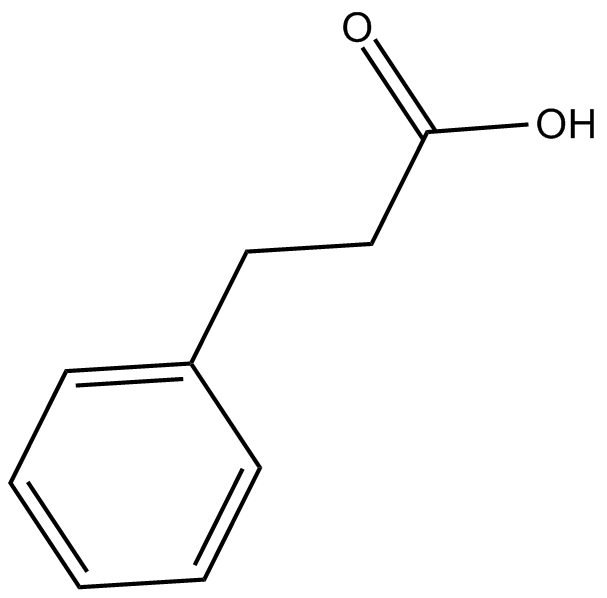
3-phenylpropionate (hydrocinnamate) (CAS No.: 501-52-0) is a phenylpropionic acid derivative that functions as a metabolite within phenylalanine-associated biochemical pathways and serves as a substrate for redox enzymes involved in aromatic compound transformation. It is commonly detected in rhizospheric and inter-root environments, where it exhibits growth-regulating activity, highlighting its relevance in plant–microbe and soil biochemical interactions. In addition to its ecological role, this compound has been reported to display antifungal properties and is frequently utilized as a model small molecule for studying aromatic acid metabolism, redox enzyme specificity, and microbial catabolic pathways. Mechanistically, it is associated with oxidative and reductive enzymatic processes that modulate phenylpropanoid-related intermediates, making it of interest in investigations of metabolic flux and signaling pathways linked to aromatic compound turnover. In vitro studies suggest that phenylpropionate derivatives can influence microbial and cellular systems at concentrations typically spanning the low micromolar to millimolar range, although precise activity profiles depend on the biological context and assay design. Consequently, 3-phenylpropionate is widely applied in biochemical assays, microbial culture studies, and pathway elucidation experiments, where dosing and exposure conditions are adjusted according to specific experimental objectives.
| Physical Appearance | A solid |
| Storage | -20°C |
| M.Wt | 150.17 |
| Cas No. | 501-52-0 |
| Formula | C9H10O2 |
| Solubility | insoluble in H2O; ≥57 mg/mL in EtOH; ≥60.9 mg/mL in DMSO |
| Chemical Name | 3-phenylpropanoic acid |
| Canonical SMILES | O=C(O)CCC1=CC=CC=C1 |
| Shipping Condition | Small Molecules with Blue Ice, Modified Nucleotides with Dry Ice. |
| General tips | We do not recommend long-term storage for the solution, please use it up soon. |