


3-methylxanthine
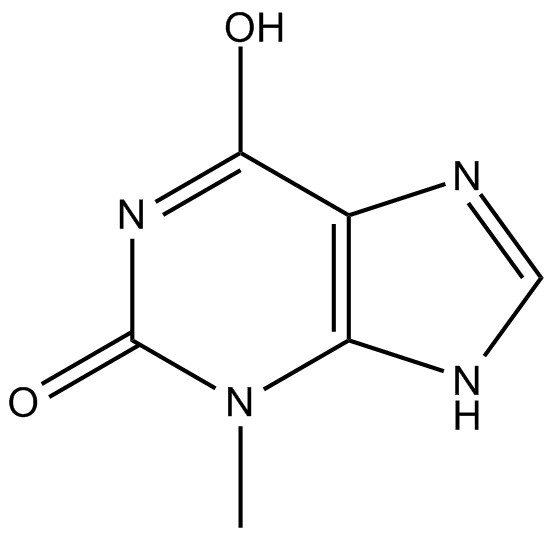
3-methylxanthine (CAS No.: 1076-22-8) is a naturally occurring xanthine derivative and a metabolic product of methylxanthines such as caffeine and theophylline, formed through cytochrome P450-mediated pathways, particularly involving CYP1A2. It functions primarily as an inhibitor of cyclic guanosine monophosphate (cGMP) phosphodiesterase, thereby modulating intracellular cGMP signaling and downstream pathways associated with smooth muscle tone and cellular signaling processes. In vitro studies demonstrate that 3-methylxanthine attenuates contractile responses in isolated guinea pig tracheal smooth muscle, with inhibitory activity observed in the micromolar range, indicating its role in regulating airway smooth muscle relaxation. This pharmacological profile supports its utility in investigating mechanisms of respiratory physiology, smooth muscle function, and cyclic nucleotide signaling pathways. Additionally, its origin as a metabolite of widely studied methylxanthines makes it relevant for metabolic and pharmacokinetic research. Although neurotoxic effects, including convulsant activity, have been reported in animal models at specific exposure levels, its primary application remains in controlled experimental systems, where concentrations are selected based on study design to explore signal transduction, enzyme inhibition, and pharmacological modulation of smooth muscle tissues.
| Physical Appearance | A solid |
| Storage | -20°C |
| M.Wt | 166.14 |
| Cas No. | 1076-22-8 |
| Formula | C6H6N4O2 |
| Synonyms | 3-MTX; 3-MX; NSC 515466 |
| Solubility | insoluble in H2O; insoluble in EtOH; ≥6.8 mg/mL in DMSO |
| Chemical Name | 6-hydroxy-3-methyl-3,9-dihydro-2H-purin-2-one |
| Canonical SMILES | CN1C2=C(N=CN2)C(O)=NC1=O |
| Shipping Condition | Small Molecules with Blue Ice, Modified Nucleotides with Dry Ice. |
| General tips | We do not recommend long-term storage for the solution, please use it up soon. |