


3-Methylanthranilic acid
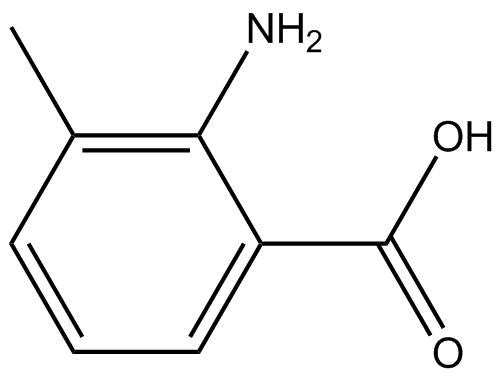
3-Methylanthranilic acid (CAS No.: 4389-45-1) is a small-molecule aromatic amino acid derivative widely utilized as a biochemical reagent in life sciences and chemical biology research, characterized by its capacity to modulate enzymatic activity and influence cellular signaling pathways associated with metabolic regulation. Experimental studies indicate that this compound can interfere with specific intracellular processes, likely through enzyme inhibition and pathway modulation, thereby providing a useful tool for investigating molecular mechanisms underlying cellular responses. Its activity is generally observed in the nanomolar to micromolar concentration range depending on the experimental system and target context, although precise parameters vary across assay types. In addition to its biological research applications, it serves as a versatile intermediate in organic synthesis, including roles in sulfonylation reactions relevant to compound library construction and early-stage drug discovery efforts. 3-Methylanthranilic acid is commonly applied in cell-based assays, target validation studies, and exploratory disease-related pathway research, where dosing and exposure conditions are tailored to specific experimental objectives and model systems, supporting its use as a reliable probe for mechanistic and screening investigations.
| Physical Appearance | Solid |
| Storage | -20°C |
| M.Wt | 151.16 |
| Cas No. | 4389-45-1 |
| Formula | C8H9NO2 |
| Solubility | insoluble in H2O; ≥52.2 mg/mL in EtOH; ≥96.6 mg/mL in DMSO |
| Chemical Name | 2-amino-3-methylbenzoic acid |
| Canonical SMILES | CC1=C(N)C(C(O)=O)=CC=C1 |
| Shipping Condition | Small Molecules with Blue Ice, Modified Nucleotides with Dry Ice. |
| General tips | We do not recommend long-term storage for the solution, please use it up soon. |