


3-Methoxyphenylacetic acid
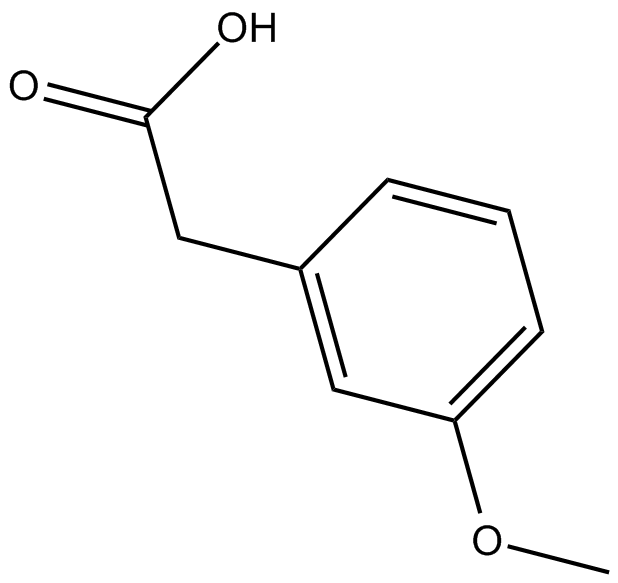





3-Methoxyphenylacetic acid (CAS No.: 1798-09-0) is an anisole-class organic compound and a derivative of m-hydroxyphenylacetic acid that functions as a phytotoxic metabolite associated with the fungal pathogen Rhizoctonia solani. It has been characterized for its ability to selectively interfere with biological processes involved in plant–microbe interactions, particularly by inhibiting pathways linked to rhizoctonia-induced root rot, making it a valuable molecular probe for studying host–pathogen dynamics and plant defense responses. Mechanistically, it is understood to disrupt signaling or metabolic processes required for pathogenic progression, although specific molecular targets remain incompletely defined, and its activity is typically evaluated in plant or microbial assay systems. In vitro studies indicate that its inhibitory effects are generally observed in the low micromolar to millimolar concentration range depending on assay conditions and biological context. This compound is widely utilized in the development of toxin-mediated bioassays for screening plant resistance to rhizoctonia root rot and for investigating phytotoxin-driven pathogenic mechanisms, with experimental concentrations and exposure conditions tailored to specific model systems and research objectives.
| Physical Appearance | Solid |
| Storage | -20°C |
| M.Wt | 166.17 |
| Cas No. | 1798-09-0 |
| Formula | C9H10O3 |
| Solubility | insoluble in H2O; ≥45.2 mg/mL in DMSO; ≥54.1 mg/mL in EtOH |
| Chemical Name | 2-(3-methoxyphenyl)acetic acid |
| Canonical SMILES | O=C(O)CC1=CC(OC)=CC=C1 |
| Shipping Condition | Small Molecules with Blue Ice, Modified Nucleotides with Dry Ice. |
| General tips | We do not recommend long-term storage for the solution, please use it up soon. |