


3-Hydroxy-2-methyl-4H-pyran-4-one
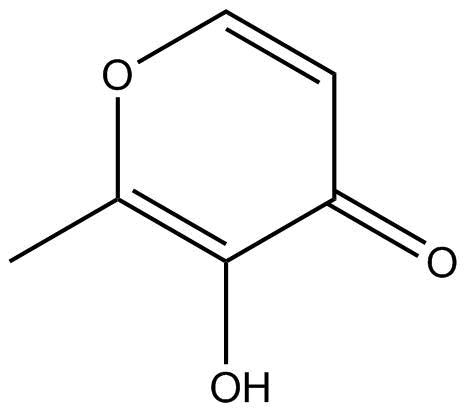
3-Hydroxy-2-methyl-4H-pyran-4-one (CAS No.: 118-71-8) is a naturally occurring aromatic small molecule, commonly referred to as maltol, that is widely studied for its redox-modulating properties and role as a metal ion chelator in biochemical systems. This compound exerts antioxidant effects primarily through coordination with transition metal ions, thereby influencing oxidative stress pathways and maintaining cellular redox homeostasis. In experimental models, it has been shown to attenuate reactive oxygen species accumulation, suppress oxidative damage to neuronal cells, and reduce apoptosis, suggesting involvement in pathways associated with mitochondrial function and oxidative injury signaling. Although precise quantitative activity metrics are not consistently reported, its biological effects are typically observed in the micromolar concentration range in cell-based assays. 3-Hydroxy-2-methyl-4H-pyran-4-one is frequently utilized in studies investigating oxidative stress-related mechanisms, neuroprotection, and metal ion homeostasis, as well as in screening platforms evaluating antioxidant and cytoprotective agents. Its physicochemical properties and chelation capacity also support its use as a model compound in catalysis and redox chemistry research, with experimental concentrations or dosing regimens varying according to specific assay designs and investigative objectives.
| Physical Appearance | Solid |
| Storage | -20°C |
| M.Wt | 126.11 |
| Cas No. | 118-71-8 |
| Formula | C6H6O3 |
| Solubility | ≥15.87 mg/mL in EtOH; ≥49.9 mg/mL in DMSO; ≥7.4 mg/mL in H2O |
| Chemical Name | 3-hydroxy-2-methyl-4H-pyran-4-one |
| Canonical SMILES | CC(OC=C1)=C(O)C1=O |
| Shipping Condition | Small Molecules with Blue Ice, Modified Nucleotides with Dry Ice. |
| General tips | We do not recommend long-term storage for the solution, please use it up soon. |