3-(4-Hydroxyphenyl)propionic acid
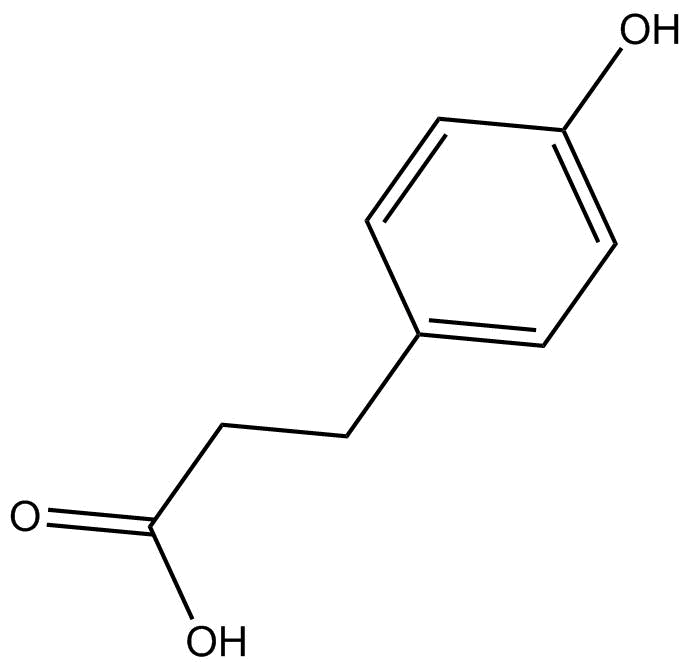





3-(4-Hydroxyphenyl)propionic acid (CAS No.: 501-97-3) is a phenylpropanoic acid derivative and a microbially associated metabolite, commonly referred to as desaminotyrosine, that has attracted interest in microbiome–host interaction studies and immunological research. It is produced through microbial metabolism of aromatic amino acids and is frequently investigated as a representative small molecule linking gut microbiota activity to host signaling pathways. Mechanistic studies indicate that this compound modulates innate immune responses, particularly through augmentation of type I interferon signaling pathways, thereby influencing antiviral defense mechanisms in experimental systems. In vitro and cellular assays suggest activity within the low micromolar concentration range, although effective concentrations vary depending on cell type, assay conditions, and experimental design. It is widely utilized in studies exploring host–microbiota crosstalk, immune regulation, and metabolic signaling, as well as in animal models aimed at dissecting the role of microbial metabolites in systemic immune responses. The concentrations or dosing regimens employed in such experiments are typically optimized according to specific research objectives, making this compound a useful tool for probing microbiota-derived modulation of host physiology in biomedical and drug discovery research contexts.
| Physical Appearance | Solid |
| Storage | -20°C |
| M.Wt | 166.17 |
| Cas No. | 501-97-3 |
| Formula | C9H10O3 |
| Solubility | ≥107.4 mg/mL in DMSO; ≥5.15 mg/mL in H2O with ultrasonic; ≥92 mg/mL in EtOH |
| Chemical Name | 3-(4-hydroxyphenyl)propanoic acid |
| Canonical SMILES | OC1=CC=C(CCC(O)=O)C=C1 |
| Shipping Condition | Small Molecules with Blue Ice, Modified Nucleotides with Dry Ice. |
| General tips | We do not recommend long-term storage for the solution, please use it up soon. |