


3,4,5-Trimethoxycinnamic acid
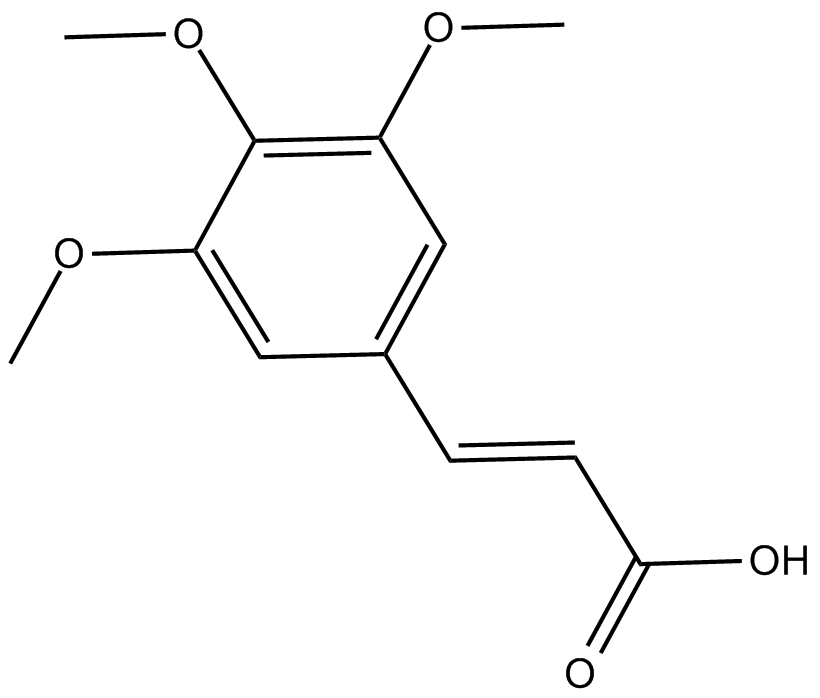





3,4,5-Trimethoxycinnamic acid (CAS No.: 90-50-6) is a naturally occurring phenylpropanoid isolated from the roots of Polygala tenuifolia, a traditional botanical source widely studied for its neuroactive constituents, and is commonly classified within small-molecule modulators of central nervous system signaling pathways. This compound has been reported to influence γ-aminobutyric acid type A (GABAA) receptor-associated mechanisms, notably by upregulating the expression of glutamate decarboxylase 65 (GAD65) and the γ-subunit of the receptor complex, while exerting minimal effects on α- and β-subunits, suggesting a degree of subunit-selective modulation. Through these interactions, it is implicated in the regulation of inhibitory neurotransmission and has demonstrated the ability to prolong sleep duration in animal models, supporting its utility in mechanistic studies of stress-related neurobiology and neuronal excitability. Additionally, its activity at the GABAA/benzodiazepine receptor complex highlights its relevance for investigating ligand–receptor interactions within inhibitory synaptic systems. Although detailed quantitative potency data are limited, reported biological effects are generally observed within low micromolar concentration ranges in vitro, with experimental dosing in vivo varying according to study design and model system. 3,4,5-Trimethoxycinnamic acid is therefore a useful research tool for probing GABAergic signaling, synaptic modulation, and neuropharmacological pathways in cellular assays and preclinical animal studies, as well as for compound screening efforts targeting central nervous system receptor dynamics.
| Physical Appearance | Solid |
| Storage | -20°C |
| M.Wt | 238.24 |
| Cas No. | 90-50-6 |
| Formula | C12H14O5 |
| Solubility | insoluble in H2O; ≥39.1 mg/mL in EtOH; ≥63.8 mg/mL in DMSO |
| Chemical Name | (E)-3-(3,4,5-trimethoxyphenyl)acrylic acid |
| Canonical SMILES | OC(/C=C/C1=CC(OC)=C(OC)C(OC)=C1)=O |
| Shipping Condition | Small Molecules with Blue Ice, Modified Nucleotides with Dry Ice. |
| General tips | We do not recommend long-term storage for the solution, please use it up soon. |