


2-Thenoyltrifluoroacetone
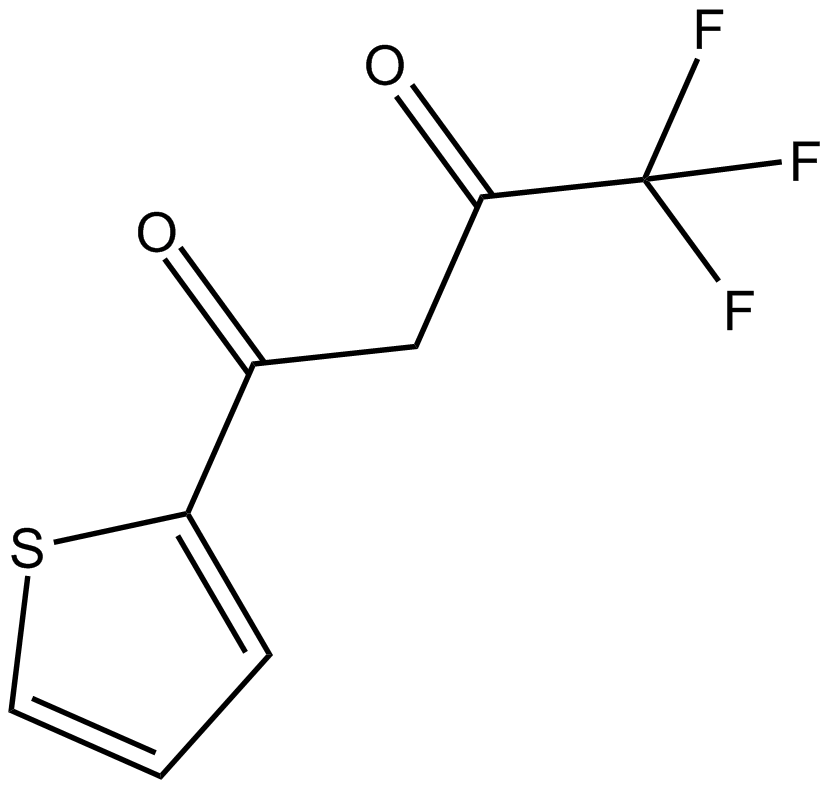
2-Thenoyltrifluoroacetone (CAS No.: 326-91-0) is a small-molecule chelating agent widely utilized in biomedical research as a potent inhibitor of cellular respiration and mitochondrial electron transport. It primarily targets succinate:ubiquinone oxidoreductase (Complex II) by binding to the quinone reduction site, thereby preventing ubiquinone interaction and disrupting electron transfer within the mitochondrial respiratory chain; it also inhibits related enzymes such as bacterial NADH fumarate reductase and has been reported to affect additional redox systems across species. Through these mechanisms, it modulates cellular bioenergetics, induces metabolic stress, and exhibits cytotoxic and antiproliferative effects, typically observed at low micromolar concentrations in vitro. Its metal-chelating properties, including interactions with transition and rare earth ions, further contribute to its utility in probing metal-dependent biological processes. As a research tool, it is commonly applied in cell-based and biochemical assays to investigate mitochondrial dysfunction, oxidative phosphorylation, and metabolic reprogramming, as well as in studies exploring the relationship between mitochondrial inhibition and disease phenotypes such as cancer or metabolic disorders. Experimental concentrations and treatment regimens vary depending on model systems and specific study objectives, making it a versatile compound for mechanistic studies and early-stage drug discovery efforts targeting mitochondrial pathways.
| Physical Appearance | A solid |
| Storage | -20°C |
| M.Wt | 222.18 |
| Cas No. | 326-91-0 |
| Formula | C8H5F3O2S |
| Synonyms | NSC 66544; NSC 405702; NSC 405703; NSC 405704; NSC 405705; NSC 405706; TTFA |
| Solubility | ≥16.13 mg/mL in H2O with gentle warming; ≥49 mg/mL in EtOH; ≥52.2 mg/mL in DMSO |
| Chemical Name | 4,4,4-trifluoro-1-(thiophen-2-yl)butane-1,3-dione |
| Canonical SMILES | O=C(CC(C(F)(F)F)=O)C1=CC=CS1 |
| Shipping Condition | Small Molecules with Blue Ice, Modified Nucleotides with Dry Ice. |
| General tips | We do not recommend long-term storage for the solution, please use it up soon. |