


2-Picolinic acid
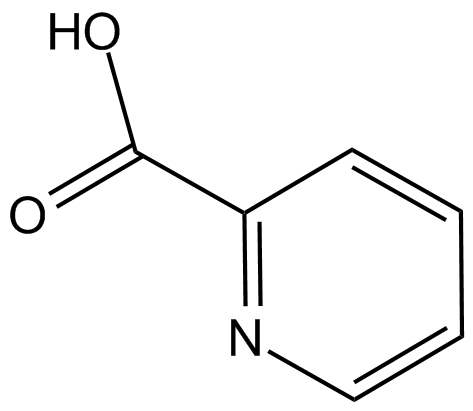





2-Picolinic acid (CAS No.: 98-98-6) is an endogenous pyridine carboxylate metabolite derived from the catabolism of tryptophan and is widely studied in the context of metal ion homeostasis, host–pathogen interactions, and antiviral research. This small molecule functions as a biologically relevant chelator with a notable role in zinc transport and distribution, and it has been shown to modulate the activity of zinc-dependent proteins, including zinc finger proteins, by altering their structural conformation and disrupting zinc coordination, thereby influencing processes such as viral replication and intracellular protein regulation. Experimental studies indicate that 2-picolinic acid exhibits antiviral activity in both cell-based and animal models, including inhibition of adenovirus replication, with effective activity typically observed in the micromolar concentration range depending on the system and assay conditions. In addition, it is frequently investigated for its interactions with immune signaling pathways, including modulation of cytokine-mediated responses such as those involving interferon gamma, making it a useful tool compound for probing innate immune mechanisms and host defense pathways. In biomedical research, 2-picolinic acid is commonly applied in studies of metalloprotein function, viral life cycles, and immunological signaling, with concentrations or dosing regimens adjusted according to specific experimental designs and objectives in vitro or in vivo.
| Physical Appearance | Solid |
| Storage | -20°C |
| M.Wt | 123.11 |
| Cas No. | 98-98-6 |
| Formula | C6H5NO2 |
| Solubility | ≥14.85 mg/mL in EtOH; ≥31.8 mg/mL in H2O; ≥34.7 mg/mL in DMSO |
| Chemical Name | picolinic acid |
| Canonical SMILES | OC(C1=NC=CC=C1)=O |
| Shipping Condition | Small Molecules with Blue Ice, Modified Nucleotides with Dry Ice. |
| General tips | We do not recommend long-term storage for the solution, please use it up soon. |