


2-Hydroxypyridine
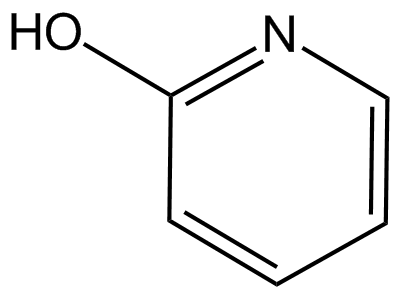
2-Hydroxypyridine (CAS No.: 142-08-5) is a heterocyclic pyridine-derived metabolite, also known as α-pyridone, that exists in dynamic tautomeric equilibrium and participates in diverse biochemical processes relevant to nitrogen-containing aromatic compound metabolism. It is widely utilized as a small-molecule probe and scaffold in chemical biology and medicinal chemistry, owing to its capacity to modulate enzymatic activities and influence pathways associated with nucleotide transformation and related metabolic networks. In biochemical systems, it has been reported to exhibit antibacterial activity and to interfere with heteroaromatic metabolic pathways, although its precise molecular targets are not fully defined and are generally considered to involve enzyme systems engaged in nitrogen heterocycle processing. In vitro studies typically observe activity in the low micromolar to millimolar concentration range, depending on assay conditions and biological context. Additionally, 2-hydroxypyridine has been employed as a catalytic agent in model reactions, such as the formation of β-oxopropyl carbonates and aminolysis processes, supporting its utility in studying reaction mechanisms and enzyme-mimetic transformations. This compound is commonly applied in enzyme activity assays, metabolic pathway investigations, and early-stage drug discovery workflows, where experimental concentrations and conditions are adjusted according to specific study designs and objectives.
| Physical Appearance | Solid |
| Storage | -20°C |
| M.Wt | 95.1 |
| Cas No. | 142-08-5 |
| Formula | C5H5NO |
| Solubility | ≥114.6 mg/mL in H2O; ≥116.8 mg/mL in EtOH; ≥118.6 mg/mL in DMSO |
| Chemical Name | pyridin-2-ol |
| Canonical SMILES | OC1=NC=CC=C1 |
| Shipping Condition | Small Molecules with Blue Ice, Modified Nucleotides with Dry Ice. |
| General tips | We do not recommend long-term storage for the solution, please use it up soon. |