


2-hydroxy-6-Methylbenzoic Acid
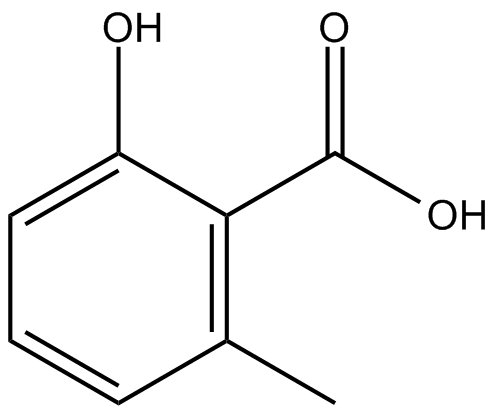
2-hydroxy-6-Methylbenzoic Acid (CAS No.: 567-61-3) is a naturally occurring polyketide metabolite commonly isolated from fungal species such as Penicillium patulum and also identified as a constituent of certain traditional medicinal plants, serving as a key biosynthetic intermediate in the production of secondary metabolites including the mycotoxin patulin. Functionally, it is widely recognized as a versatile molecular scaffold in medicinal chemistry, contributing to the structural frameworks of diverse bioactive compounds such as antibiotic and antitumor agents, and is frequently employed as a building block in the synthesis of antibacterial and anti-inflammatory molecules. Although its direct molecular targets are not comprehensively defined, studies suggest that compounds of this class can modulate cellular signaling pathways associated with inflammation, oxidative stress, and microbial defense, making it relevant for investigations into pathway regulation and disease mechanisms. In vitro, related derivatives typically exhibit biological activity in the low micromolar to sub-millimolar range depending on the assay system and target organism, supporting its utility in early-stage screening and mechanistic studies. In research settings, this compound is commonly used in cell-based assays and biochemical evaluations to explore structure–activity relationships, natural product biosynthesis, and drug discovery pipelines, with experimental concentrations or dosing regimens varying according to specific study designs and intended applications.
| Physical Appearance | A solid |
| Storage | -20°C |
| M.Wt | 152.15 |
| Cas No. | 567-61-3 |
| Formula | C8H8O3 |
| Synonyms | 2,6-Cresotic Acid; 6-Methylsalicylic Acid; 6-MSA; NSC 403256; 6-hydroxy- o -Toluic Acid |
| Solubility | insoluble in H2O; ≥43 mg/mL in EtOH; ≥55.5 mg/mL in DMSO |
| Chemical Name | 2-hydroxy-6-methylbenzoic acid |
| Canonical SMILES | CC1=C(C(O)=O)C(O)=CC=C1 |
| Shipping Condition | Small Molecules with Blue Ice, Modified Nucleotides with Dry Ice. |
| General tips | We do not recommend long-term storage for the solution, please use it up soon. |