


2-Carboxybenzaldehyde
2-Carboxybenzaldehyde (CAS No.: 119-67-5) is an aromatic aldehyde derivative that serves as a key intermediate metabolite in the microbial biodegradation of polycyclic aromatic hydrocarbons, including fluoranthene and phenanthrene, and is commonly detected in transformation pathways mediated by bacterial strains such as Pasteurella sp., Mycobacterium sp., and Pseudomonas sp. This compound is widely utilized as a model substrate in studies investigating microbial catabolic networks, enzymatic oxidation and ring-cleavage mechanisms, and the metabolic adaptation of microorganisms to persistent environmental pollutants. Although no specific molecular targets or signaling pathways have been definitively established for this compound in mammalian systems, it is frequently applied in biochemical and microbiological assays to evaluate enzyme activity, substrate specificity, and the functional characterization of dioxygenases and related biodegradative enzymes. In vitro applications typically involve low micromolar to millimolar concentration ranges depending on assay design, while its use in cell-based or microbial culture systems supports mechanistic studies of aromatic compound transformation and environmental bioremediation processes.
| Physical Appearance | Solid |
| Storage | -20°C |
| M.Wt | 150.13 |
| Cas No. | 119-67-5 |
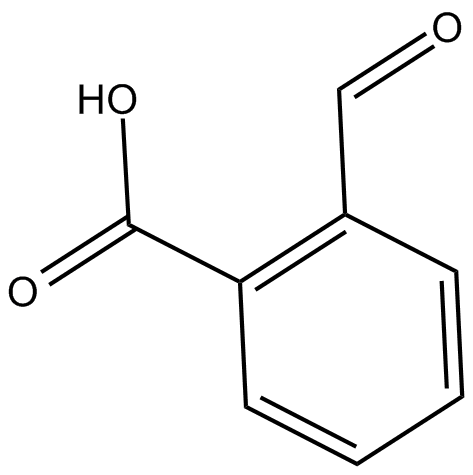
| Formula | C8H6O3 |
| Solubility | insoluble in H2O; ≥38 mg/mL in EtOH; ≥41.6 mg/mL in DMSO |
| Chemical Name | 2-formylbenzoic acid |
| Canonical SMILES | O=CC1=C(C(O)=O)C=CC=C1 |
| Shipping Condition | Small Molecules with Blue Ice, Modified Nucleotides with Dry Ice. |
| General tips | We do not recommend long-term storage for the solution, please use it up soon. |