


2,6-Dimethylpyrazine
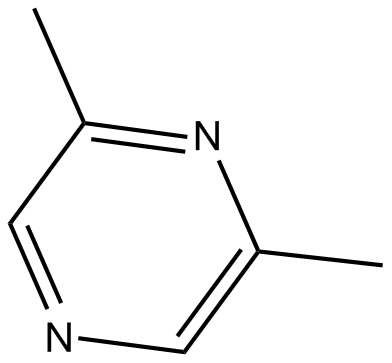





2,6-Dimethylpyrazine (CAS No.: 108-50-9) is a heterocyclic pyrazine derivative broadly utilized as a biochemical probe in neurophysiology and sensory signaling research, particularly in studies investigating olfactory and gustatory pathways within the central nervous system. This compound has been shown to modulate specific olfactory receptors and associated neural circuits, thereby contributing to the elucidation of molecular mechanisms underlying odor perception and signal transduction. Its activity is generally characterized at low micromolar to millimolar concentrations in vitro, depending on the experimental system, where it serves as a model ligand for receptor activation and neuronal response profiling. In addition to its role in sensory biology, 2,6-dimethylpyrazine has been investigated in animal models for its influence on reproductive system parameters, supporting its utility in endocrine and physiological studies. Owing to its defined sensory-related bioactivity and chemical tractability, it is also employed as a substrate or intermediate in the development and screening of compounds targeting metabolic and signaling pathways. Typical applications include use in cell-based assays, electrophysiological recordings, and in vivo models designed to dissect neural circuitry and receptor-mediated processes, with experimental concentrations or dosing regimens adjusted according to specific research objectives.
| Physical Appearance | A liquid |
| Storage | -20°C |
| M.Wt | 108.14 |
| Cas No. | 108-50-9 |
| Formula | C6H8N2 |
| Solubility | ≥23.25 mg/mL in DMSO; ≥33.85 mg/mL in EtOH; ≥52.4 mg/mL in H2O |
| Chemical Name | 2,6-dimethylpyrazine |
| Canonical SMILES | CC1=CN=CC(C)=N1 |
| Shipping Condition | Small Molecules with Blue Ice, Modified Nucleotides with Dry Ice. |
| General tips | We do not recommend long-term storage for the solution, please use it up soon. |