


2,5-Dimethyl pyrazine
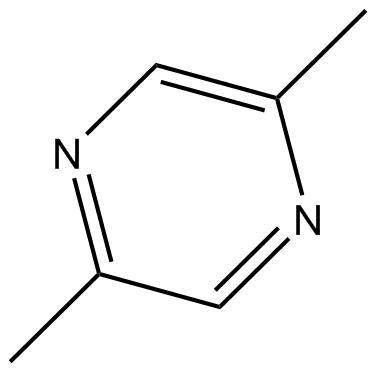
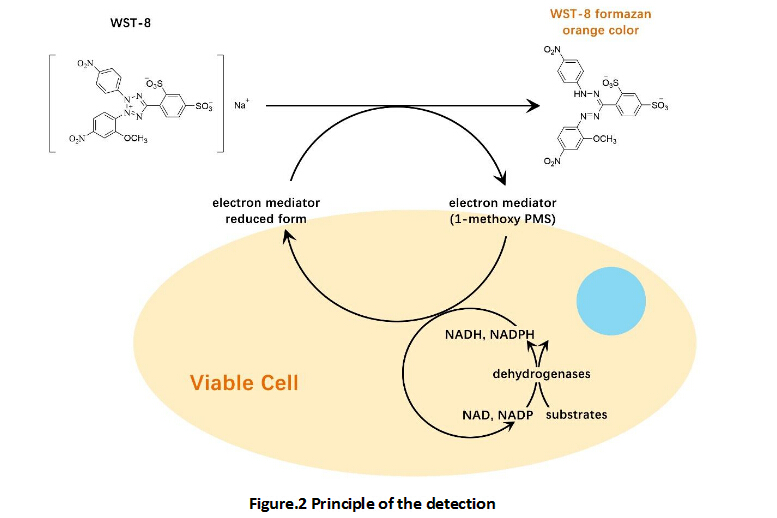
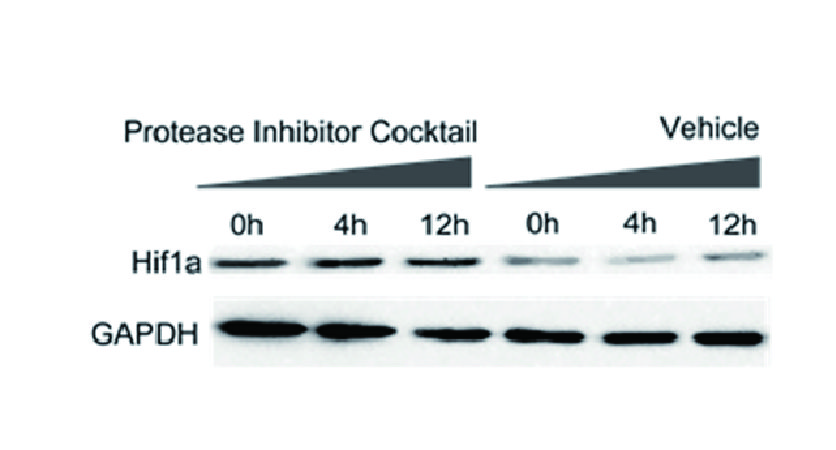
2,5-Dimethyl pyrazine (CAS No.: 123-32-0) is an endogenous small-molecule metabolite belonging to the pyrazine class, widely detected in biological systems and generated through both enzymatic and microbial processes, including pathways involving Bacillus subtilis and protein hydrolysate reactions. In biochemical and cellular research, it has been associated with modulation of signaling pathways and enzyme activities, contributing to regulatory effects on cell proliferation and apoptosis, although its precise molecular targets remain to be fully elucidated. Available evidence suggests that it may influence cellular homeostasis through interactions with metabolic and stress-response pathways, making it of interest in studies of tumor biology and metabolic dysregulation. Its biochemical behavior can be monitored using analytical techniques such as stable isotope dilution assays, and it can undergo oxidation to yield intermediates relevant to broader metabolic investigations. In vitro studies generally explore its activity within micromolar concentration ranges, with experimental conditions varying depending on model systems and assay design. Consequently, 2,5-dimethyl pyrazine is primarily utilized as a research tool in cell-based assays and disease-related experimental models to investigate metabolic signaling, enzymatic regulation, and cellular response mechanisms.
| Physical Appearance | Liquid |
| Storage | -20°C |
| M.Wt | 108.14 |
| Cas No. | 123-32-0 |
| Formula | C6H8N2 |
| Solubility | ≥39.1 mg/mL in H2O; ≥41.6 mg/mL in DMSO; ≥44.3 mg/mL in EtOH |
| Chemical Name | 2,5-dimethylpyrazine |
| Canonical SMILES | CC1=CN=C(C)C=N1 |
| Shipping Condition | Small Molecules with Blue Ice, Modified Nucleotides with Dry Ice. |
| General tips | We do not recommend long-term storage for the solution, please use it up soon. |