


1-Octadecanol
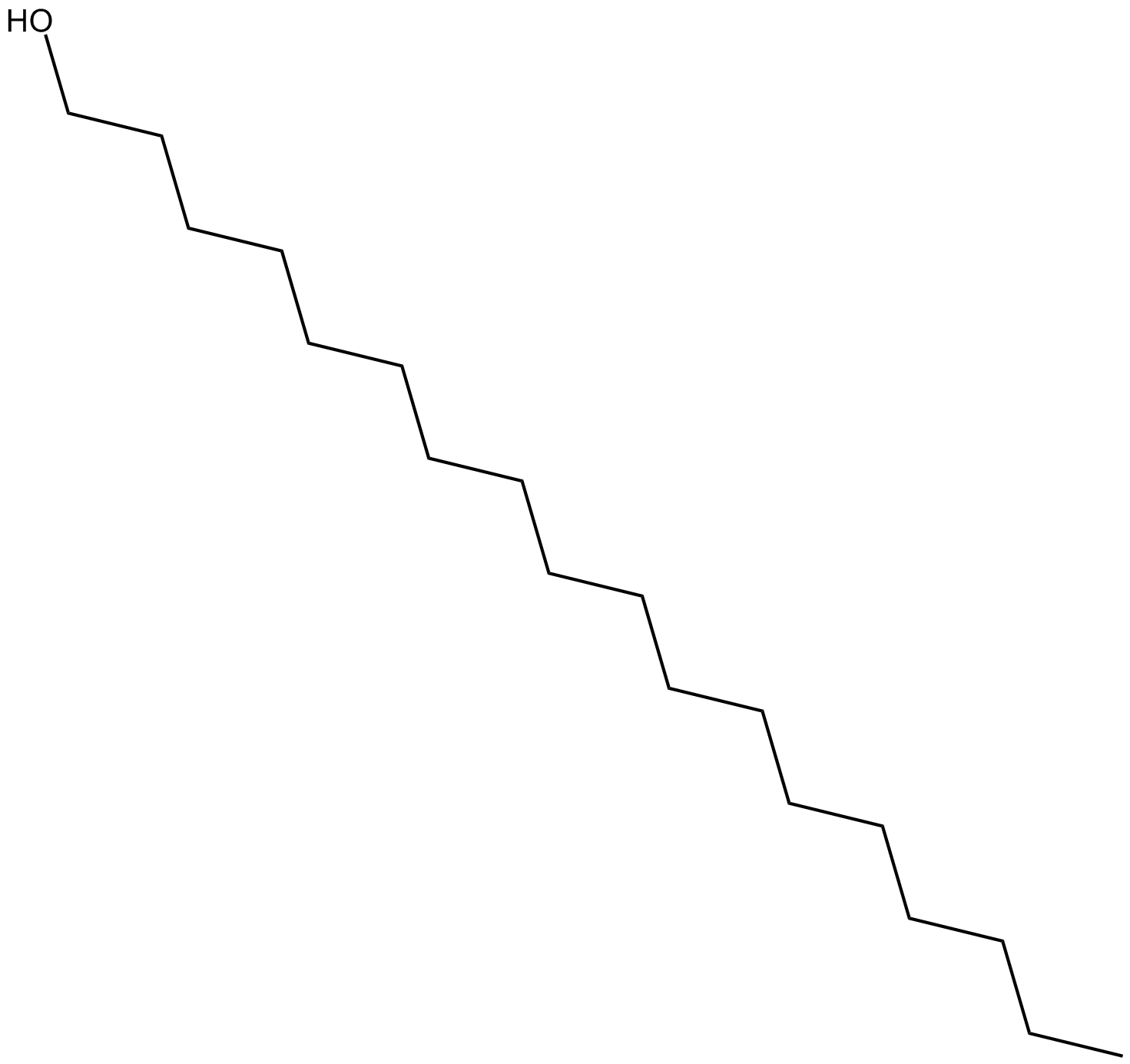
1-Octadecanol (CAS No.: 112-92-5) is a naturally occurring long-chain fatty alcohol that functions as an intermediate in endogenous lipid metabolism and is commonly incorporated into complex lipid species such as plasmalogens. In biochemical and cell biology research, it is widely utilized to investigate lipid metabolic pathways, membrane biophysics, and the regulation of membrane protein function, as it can modulate membrane organization, fluidity, and lipid–protein interactions. This compound has also been employed in studies of lipid-associated signaling processes and metabolic disorders, including conditions characterized by abnormal fatty alcohol accumulation, thereby providing insight into disease-related lipid dysregulation mechanisms. In formulation and drug delivery research, 1-octadecanol serves as a lipidic excipient for the preparation of nanostructured carriers, where it contributes to the formation of hydrophobic matrices and influences controlled release properties. Additionally, its ability to form occlusive lipid films has made it relevant in experimental models examining barrier function and transepidermal water loss. While specific molecular targets are not well-defined, its biological effects are generally attributed to its integration into lipid bilayers and its impact on lipid metabolic networks and membrane-associated signaling pathways, with observed activities typically occurring in the micromolar concentration range depending on the experimental system.
| Physical Appearance | Solid |
| Storage | -20°C |
| M.Wt | 270.49 |
| Cas No. | 112-92-5 |
| Formula | C18H38O |
| Solubility | insoluble in H2O; ≥15.6 mg/mL in EtOH with ultrasonic; ≥3.21 mg/mL in DMSO |
| Chemical Name | octadecan-1-ol |
| Canonical SMILES | OCCCCCCCCCCCCCCCCCC |
| Shipping Condition | Small Molecules with Blue Ice, Modified Nucleotides with Dry Ice. |
| General tips | We do not recommend long-term storage for the solution, please use it up soon. |