1,4-Butanediol
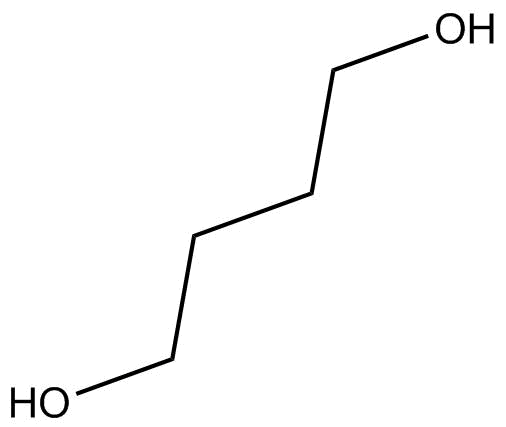
1,4-Butanediol (CAS No.: 110-63-4) is a straight-chain aliphatic diol widely utilized in biomedical research as a metabolic precursor for studying neurochemical pathways and central nervous system function. In biological systems, it is enzymatically converted by alcohol dehydrogenase and aldehyde dehydrogenase into γ-hydroxybutyric acid (GHB), an endogenous neuromodulator that interacts with specific GHB receptors and GABA_B receptors, thereby influencing neurotransmission, sleep regulation, and neuroprotective signaling processes. Through this biotransformation, 1,4-butanediol serves as a valuable tool compound for probing GHB-mediated pathways and dissecting GABAergic signaling mechanisms in vitro and in vivo. It is commonly employed in the establishment of animal models to investigate neurological and behavioral phenotypes, as well as in pharmacological studies aimed at screening and characterizing modulators of inhibitory neurotransmission. Experimental applications typically involve concentration ranges spanning low micromolar to millimolar levels in cellular systems, with dosing in animal studies adjusted according to specific experimental paradigms and research objectives.
| Physical Appearance | An oily?liquid |
| Storage | -20°C |
| M.Wt | 90.12 |
| Cas No. | 110-63-4 |
| Formula | C4H10O2 |
| Solubility | ≥63.9 mg/mL in EtOH; ≥73 mg/mL in H2O; ≥82.6 mg/mL in DMSO |
| Chemical Name | butane-1,4-diol |
| Canonical SMILES | OCCCCO |
| Shipping Condition | Small Molecules with Blue Ice, Modified Nucleotides with Dry Ice. |
| General tips | We do not recommend long-term storage for the solution, please use it up soon. |