


1,3-Dihydroxyacetone
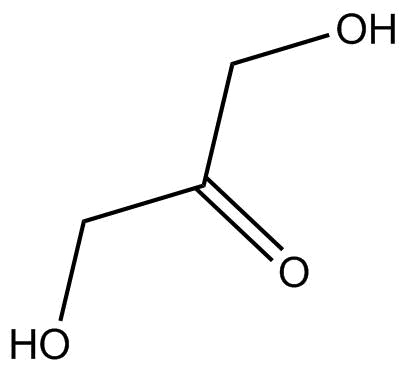
1,3-Dihydroxyacetone (CAS No.: 96-26-4) is a naturally occurring ketotriose and a central intermediate in carbohydrate metabolism, widely utilized as a biochemical reagent and synthetic building block in life sciences research. It is readily phosphorylated by triokinase to dihydroxyacetone phosphate, linking it directly to glycolytic and gluconeogenic pathways, and thereby serving as a useful probe for studying cellular energy metabolism and metabolic flux in erythrocytes and other cell systems. Experimental evidence indicates that it can modulate intracellular signaling, including elevation of cyclic AMP levels, supporting its application in investigations of second messenger systems and metabolic regulation. In vitro studies typically employ concentrations in the low micromolar to millimolar range, depending on cell type and assay design, to evaluate its effects on metabolic intermediates and redox balance. Additionally, its role in maintaining 2,3-diphosphoglycerate levels in stored erythrocytes has made it relevant for ex vivo studies of blood preservation and cellular viability. Produced industrially via microbial oxidation of glycerol by Gluconobacter oxydans, 1,3-dihydroxyacetone also serves as a precursor for fine chemical synthesis and biodegradable polymer research, making it valuable in both biochemical pathway elucidation and materials-oriented drug discovery workflows.
| Physical Appearance | Solid |
| Storage | -20°C |
| M.Wt | 90.08 |
| Cas No. | 96-26-4 |
| Formula | C3H6O3 |
| Solubility | ≥110 mg/mL in H2O; ≥112.4 mg/mL in DMSO; ≥5.09 mg/mL in EtOH with ultrasonic |
| Chemical Name | 1,3-dihydroxypropan-2-one |
| Canonical SMILES | OCC(CO)=O |
| Shipping Condition | Small Molecules with Blue Ice, Modified Nucleotides with Dry Ice. |
| General tips | We do not recommend long-term storage for the solution, please use it up soon. |