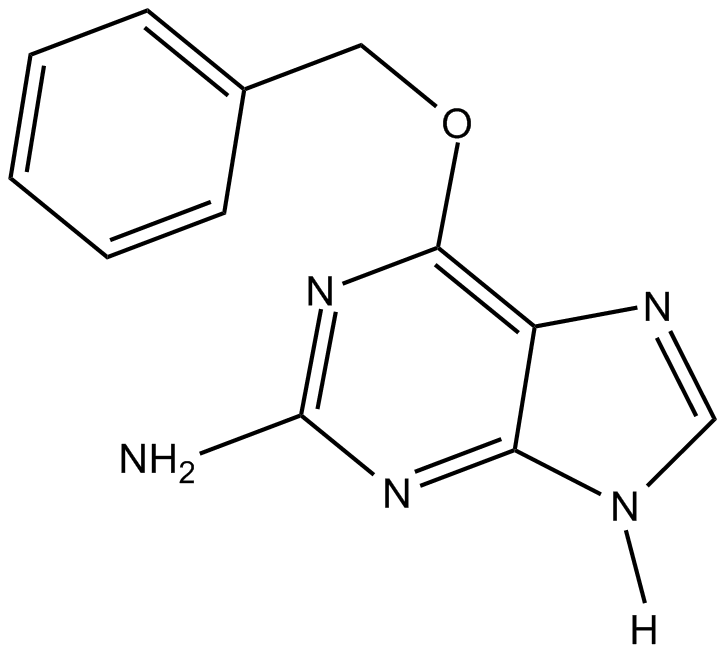
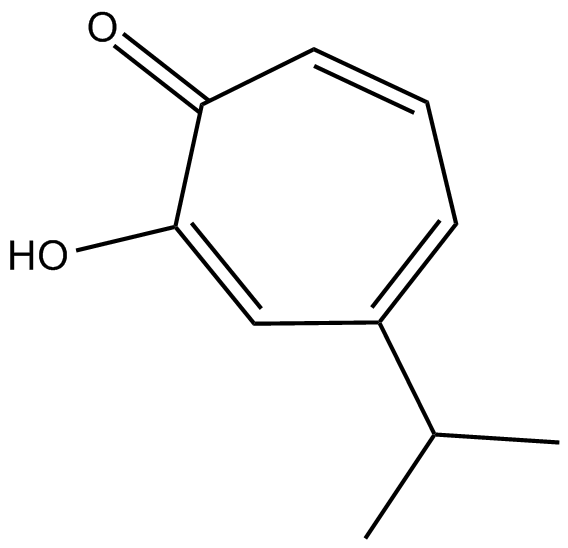
Thioguanine
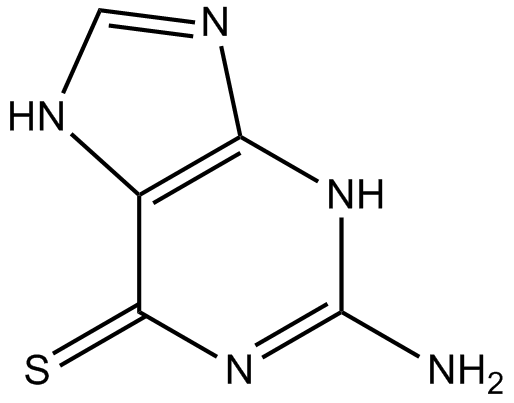





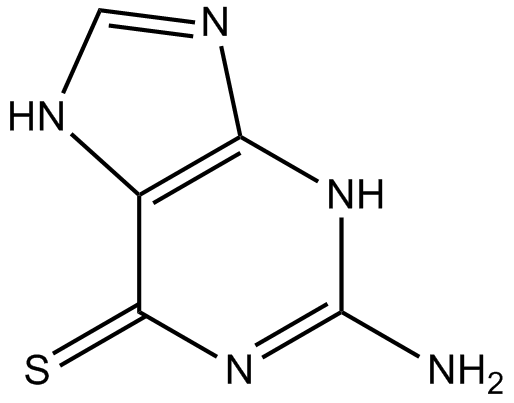
Thioguanine (CAS No. 154-42-7) is a thiopurine immunosuppressant with antitumor and antiviral properties. Its therapeutic targets include hypoxanthine-guanine phosphoribosyltransferase (HGPRT) and DNA methyltransferase 1 (DNMT1). Its IC₅₀ values cover multiple scenarios: 0.9302 μM against EV71 virus (in HT-29 cells, selectivity index [SI] > 2150.1), 5.481~23.09 μM for antitumor activity (in MCF-7 breast cancer cells), 3.92~5.81 μM in PA-1 ovarian cancer cells, and a LC₅₀ of 5.0 μg/ml in leukemia cells (T-cell acute lymphoblastic leukemia [T-cell ALL]). Clinically, it is primarily indicated for patients with inflammatory bowel disease (IBD) who are intolerant to or unresponsive to azathioprine (AZA)/mercaptopurine (MP). The recommended oral initial and maintenance dose is 20 mg per day, which can be adjusted to 10~80 mg per day based on tolerability. Low doses (≤20 mg per day) are associated with a low risk of hepatotoxicity. In in vitro experiments, the effective antiviral concentration ranges from 0.5 to 3 μM, and the effective antitumor concentration ranges from 3.92 to 23.09 μM.
References:
[1] You Q, Wu J, Lyu R, Cai Y, Jiang N, Liu Y, Zhang F, He Y, Chen D, Wu Z. 6-thioguanine inhibits EV71 replication by reducing BIRC3-mediated autophagy. BMC Microbiol. 2025 Jan 29;25(1):53. doi: 10.1186/s12866-025-03752-8. PMID: 39881250; PMCID: PMC11776205.
[2] Rajashekaraiah R, Kumar PR, Prakash N, Rao GS, Devi VR, Metta M, Narayanaswamy HD, Swamy MN, Satyanarayan K, Rao S, Rathnamma D, Sahadev A, Sunilchandra U, Santhosh CR, Dhanalakshmi H, Kumar SN, Ruban SW, Kalmath GP, Gomes AR, Kumar KRA, Govindappa PK. Anticancer efficacy of 6-thioguanine loaded chitosan nanoparticles with or without curcumin. Int J Biol Macromol. 2020 Apr 1;148:704-714. doi: 10.1016/j.ijbiomac.2020.01.117. Epub 2020 Jan 15. PMID: 31954127.
[3] Kaspers GJ, Wijnands JJ, Hartmann R, Huismans L, Loonen AH, Stackelberg A, Henze G, Pieters R, Hählen K, Van Wering ER, Veerman AJ. Immunophenotypic cell lineage and in vitro cellular drug resistance in childhood relapsed acute lymphoblastic leukaemia. Eur J Cancer. 2005 Jun;41(9):1300-3. doi: 10.1016/j.ejca.2005.02.026. PMID: 15869873.
[4] Vergnes JS, Ballantyne B. Genetic toxicology studies with glutaraldehyde. J Appl Toxicol. 2002 Jan-Feb;22(1):45-60. doi: 10.1002/jat.825. PMID: 11807929.
[5] Li H, An X, Zhang D, Li Q, Zhang N, Yu H, Li Z. Transcriptomics Analysis of the Tumor-Inhibitory Pathways of 6-Thioguanine in MCF-7 Cells via Silencing DNMT1 Activity. Onco Targets Ther. 2020 Feb 11;13:1211-1223. doi: 10.2147/OTT.S236543. PMID: 32103989; PMCID: PMC7023860.
| Physical Appearance | A solid |
| Storage | Store at -20°C |
| M.Wt | 167.19 |
| Cas No. | 154-42-7 |
| Formula | C5H5N5S |
| Solubility | insoluble in EtOH; insoluble in H2O; ≥8.35 mg/mL in DMSO with gentle warming |
| Chemical Name | 2-amino-3,7-dihydropurine-6-thione |
| Canonical SMILES | NC(Nc1c2[nH]cn1)=NC2=S |
| Shipping Condition | Small Molecules with Blue Ice, Modified Nucleotides with Dry Ice. |
| General tips | We do not recommend long-term storage for the solution, please use it up soon. |
Quality Control & MSDS
- View current batch:
Chemical structure