


Cell Cycle/Checkpoint
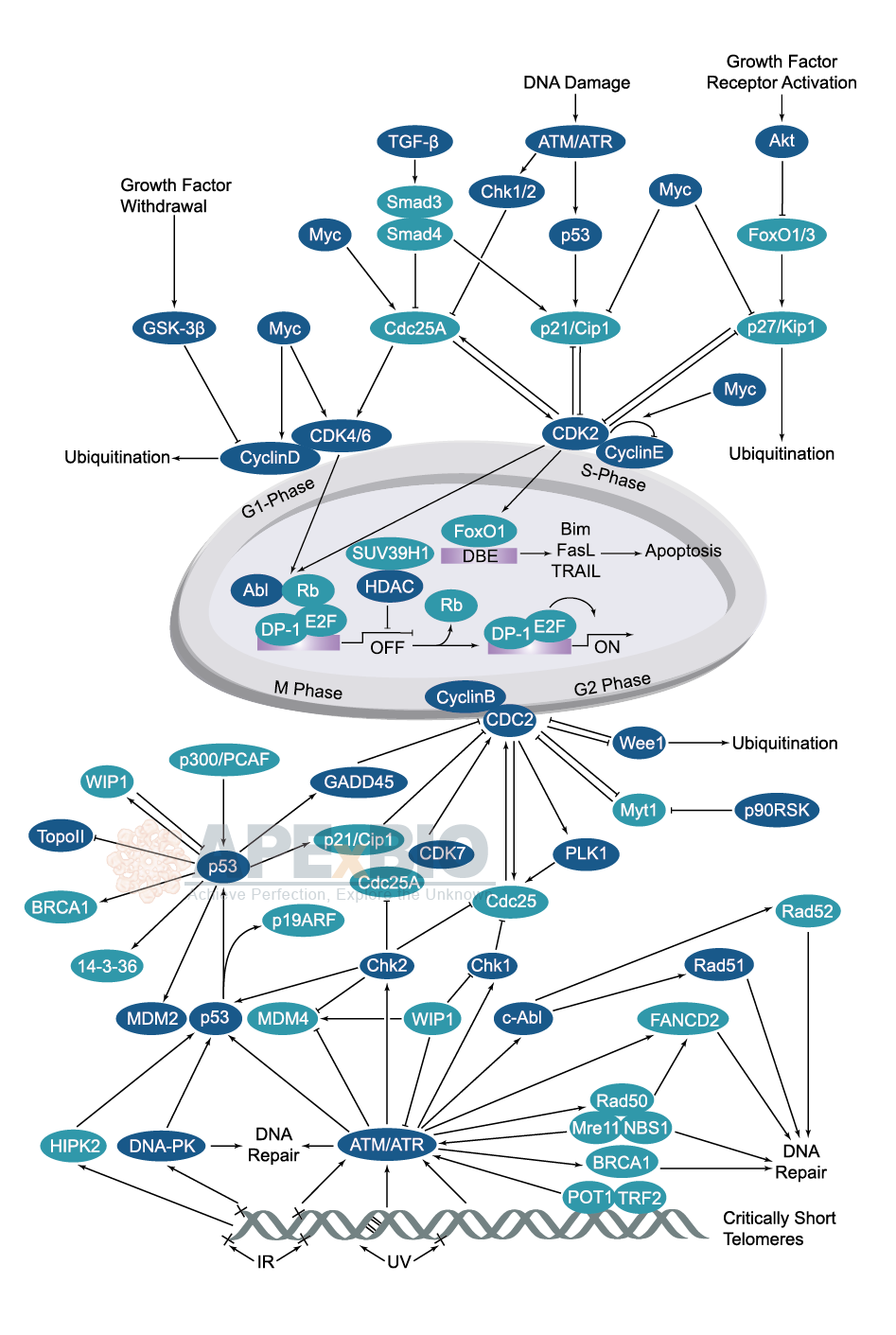
The cell cycle is consisted of 4 main phases: Gap 1 (G1), DNA replication (S), Gap 2 (G2), and mitosis (M). There are “checkpoints” mechanism regulates the transition between these phases, at the G1/S boundary, in the S-phase and during G2/M phases. Cell can only pass through these checkpoints when signaling factors are activated and free of DNA damage. Important proteins that control cell cycle events and checkpoints are cullins, cyclins, cyclin-dependent kinases (Cdks), p53 and their inhibitors etc. Cdks family (Cdk2, Cdk3, Cdk4 and Cdk6) are Ser/Thr kinases that regulate cell cycle progression in association with cyclin binding partners (cyclin D, cyclin E and cyclin A) during all four phases. p53 halts the cell cycle if the DNA is damaged and allowing time for DNA repair to progress; it can also initiate apoptosis if DNA damage is too severe to be repaired.
-
 BA4329 RaluridineSummary: Raluridine is a purine nucleoside analog.
 -
BA4331 5-Iodo-cytidineSummary: 5-Iodo-cytidine (5-Iodo-D-cytidine) is a purine nucleoside analog.
-
BA4332 2-Deoxy-L-guanosineSummary: 2'-Deoxy-L-guanosine selectively inhibits D-thymidine phosphorylation catalyzed by 1-thymidine kinase.
-
BA4334 2-O-MethylinosineSummary: 9-((2R,3R,4R,5R)-4-Hydroxy-5-(hydroxymethyl)-3-methoxytetrahydrofuran-2-yl)-9H-purin-6-ol (2'-O-methylinosine) is a purine nucleoside analog.
-
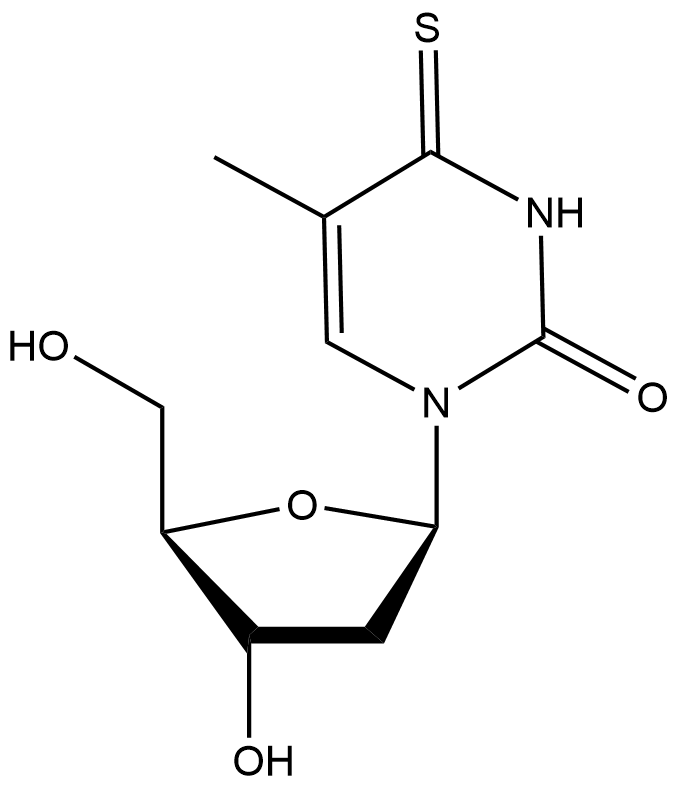 BA4335 4-ThiothymidineSummary: 4-Thiothymidine is a purine nucleoside analog.
 -
BA4339 2-C-EthynyluridineSummary: 2'-C-Ethynyluridine is a purine nucleoside analog.
-
BA4341 L-GuanosineSummary: L-Guanosine is in the L-configuration.
-
BA4342 2-MethyladenosineSummary: 2-Methyladenosine is an adenine nucleoside analog.
-
BA4343 L-ThreonolactoneSummary: L-Threonolactone ((3R,4S)-3,4-Dihydroxyoxolan-2-one) is a purine nucleoside analog.
-
BA4344 3-DeoxyinosineSummary: 3'-Deoxyinosine is a purine nucleoside analog.