Thiothixene
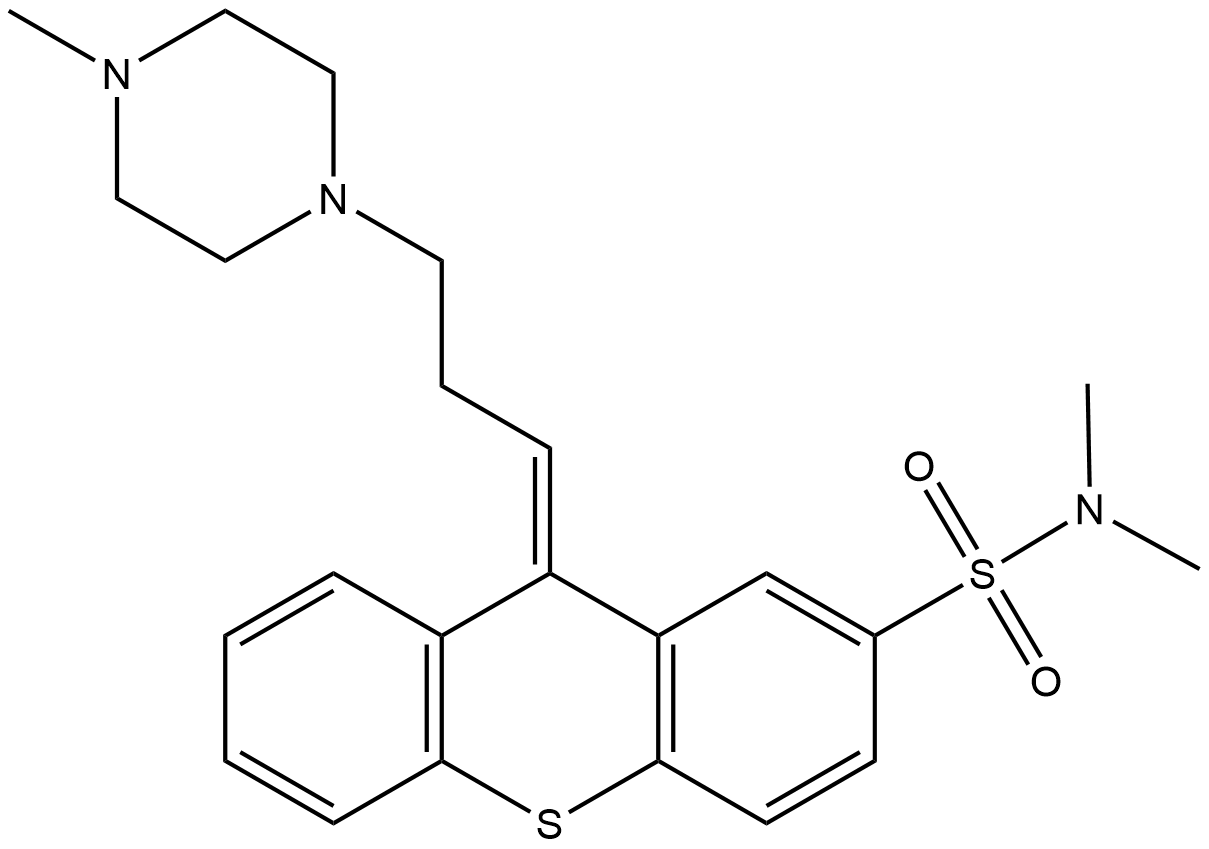
Thiothixene (CAS No. 5591-45-7) is a typical antipsychotic agent. Its primary pharmacological activity consists of antagonism at central dopamine D2 receptors (the main target) and serotonin 5-HT2A receptors, through which it exerts antipsychotic effects. In addition, thiothixene can promote efferocytosis (including sustained efferocytosis) of apoptotic cells and lipid-laden cells by macrophages, via induction of the retinol-binding protein receptor Stra6l, activation of the vitamin A signaling pathway, and subsequent upregulation of arginase 1; it also partially counteracts the inhibitory effect of dopamine on efferocytosis.
Commonly used concentrations and dosing regimens include: 2 μM in in vitro cell-based experiments (e.g., RAW macrophages and bone marrow-derived macrophages, BMDMs) to enhance efferocytosis; a single oral dose of 20 mg in healthy volunteers for pharmacokinetic studies; and, in clinical practice, an initial adult oral dose of 15–30 mg/day with a maintenance dose of 15–60 mg/day, administered in 2–3 divided doses. After oral administration in patients, plasma concentrations reach approximately 10–22 ng/mL within 2–2.5 hours. Therapeutically effective concentrations for the treatment of schizophrenia and related psychotic disorders correspond to maintenance plasma levels of 10–22 ng/mL, at which antipsychotic efficacy is achieved. Thiothixene metabolism is not dependent on CYP2D6; its major metabolites are N-demethylated and sulfoxide derivatives. Co-administration with paroxetine does not result in clinically relevant pharmacokinetic interactions. Thiothixene is generally well tolerated, with common adverse reactions including sedation and akathisia.
References:
[1] Guthrie SK, Hariharan M, Kumar AA, Bader G, Tandon R. The effect of paroxetine on thiothixene pharmacokinetics. J Clin Pharm Ther. 1997 Jun;22(3):221-6. doi: 10.1046/j.1365-2710.1997.95175951.x. PMID: 9447478.
[2] Kojima Y, Ye Z, Wang F, Lotfi M, Bell CF, Adkar SS, Luo L, Fu C, Leeper NJ. The antipsychotic drug thiothixene stimulates macrophages to clear pathogenic cells by inducing arginase 1 and continual efferocytosis. Sci Signal. 2025 Apr 8;18(881):eads6584. doi: 10.1126/scisignal.ads6584. Epub 2025 Apr 8. PMID: 40198748; PMCID: PMC12068545.
| Storage | Store at -20°C |
| M.Wt | 443.62 |
| Cas No. | 5591-45-7 |
| Formula | C23H29N3O2S2 |
| Synonyms | CP 12252-1; Navan; Navaron; Orbinamon; NSC 108165 |
| Solubility | Soluble in DMSO |
| Chemical Name | (E)-N,N-dimethyl-9-(3-(4-methylpiperazin-1-yl)propylidene)-9H-thioxanthene-2-sulfonamide |
| Canonical SMILES | CN1CCN(CC1)CC/C=C2C3=C(C=CC(S(N(C)C)(=O)=O)=C3)SC4=C/2C=CC=C4 |
| Shipping Condition | Small Molecules with Blue Ice, Modified Nucleotides with Dry Ice. |
| General tips | We do not recommend long-term storage for the solution, please use it up soon. |