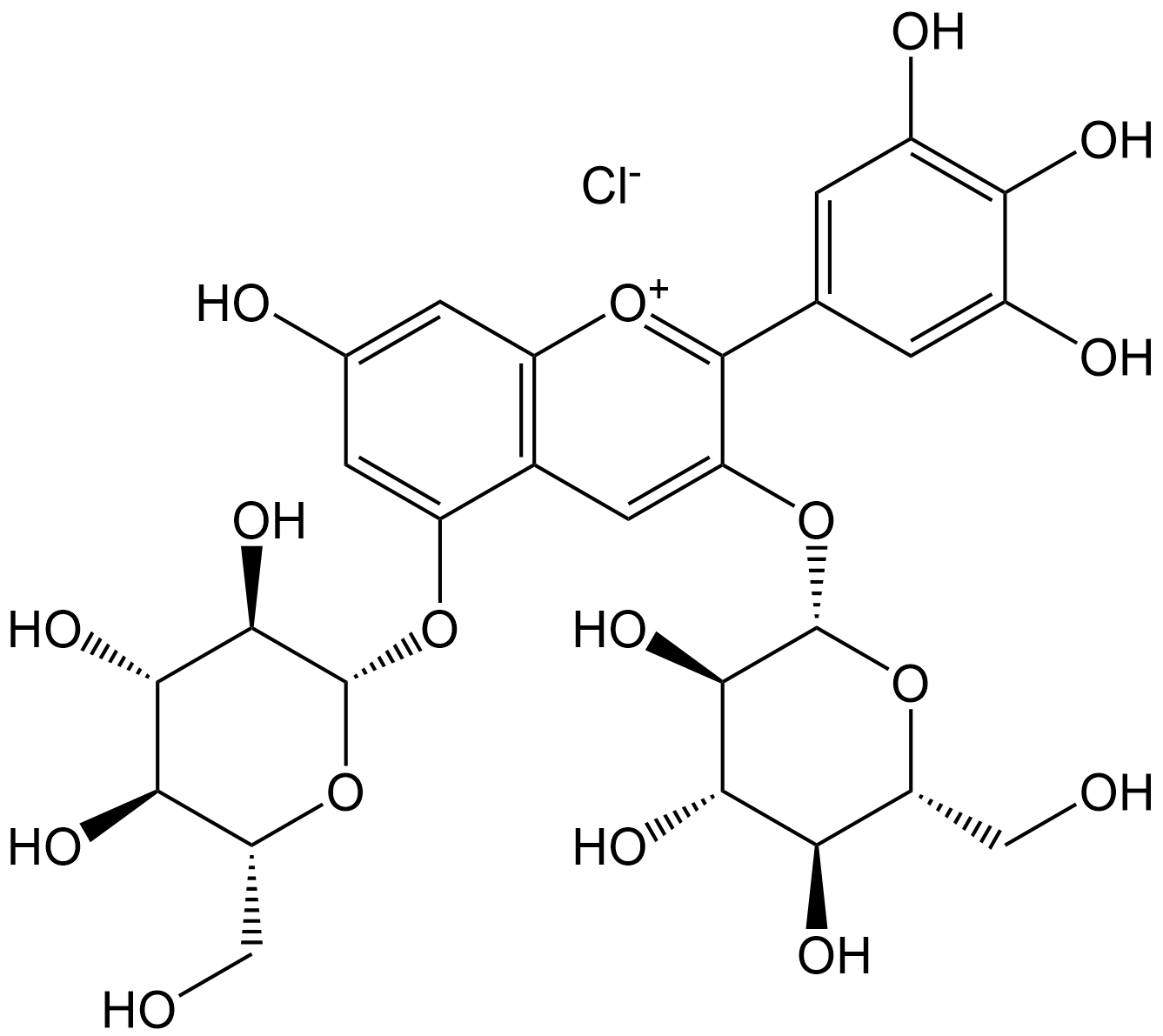
Delphinidin 3,5-diglucoside
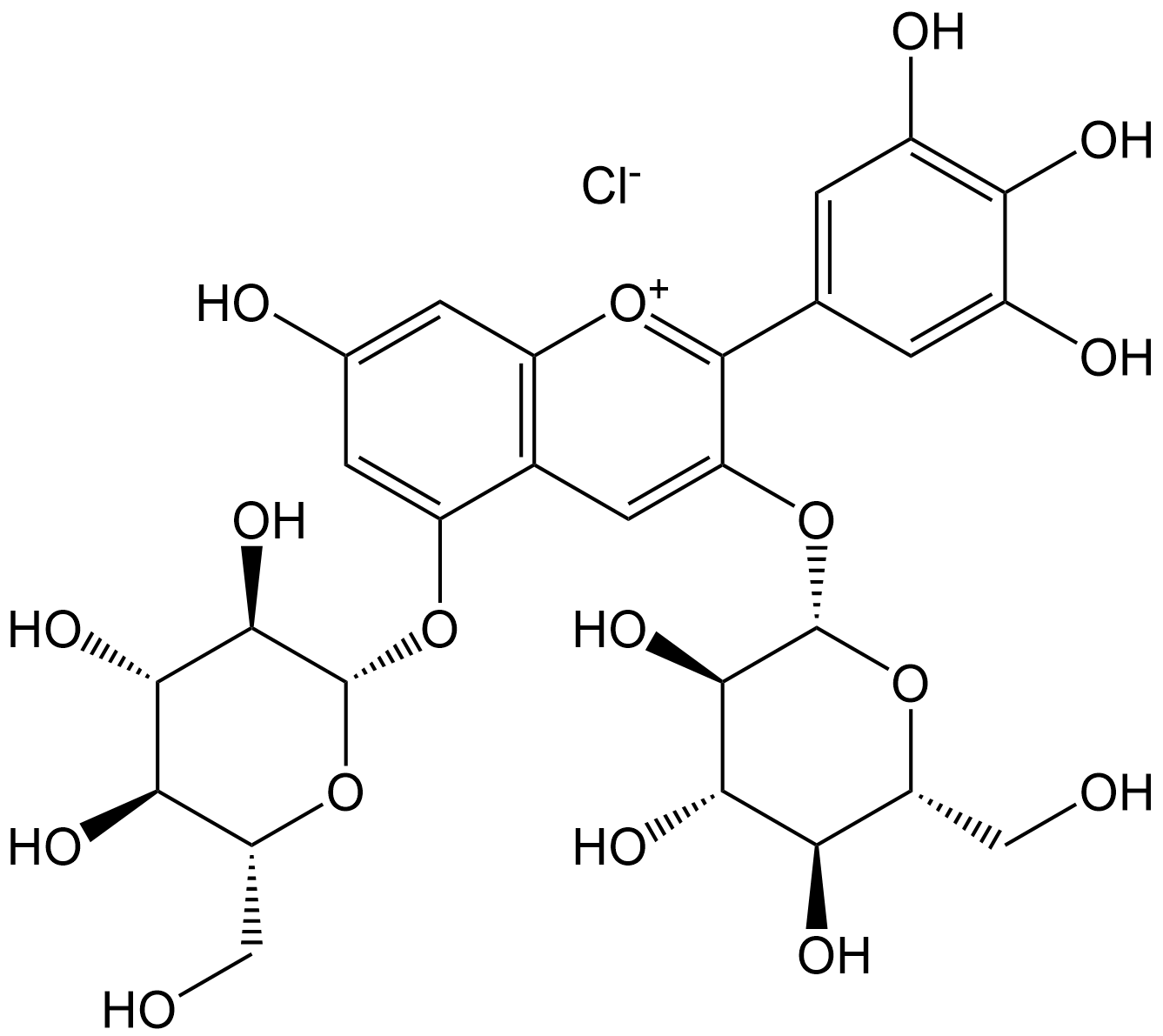
Delphinidin 3,5-diglucoside (CAS 17670-06-3) is a widely occurring diglucosidic anthocyanin in nature (with delphinidin as the aglycone, and the B ring containing two hydroxyl groups). Its core bioactivities and application research data are as follows: It exhibits potent antioxidant activity, with a significant in vitro oxygen radical absorbance capacity (ORAC) value. It can effectively scavenge reactive oxygen species (ROS), inhibit lipid peroxidation and DNA oxidative damage, and its antioxidant efficacy is associated with the polyhydroxyl substitutions in its structure. Additionally, it has a well-defined anti-inflammatory effect, which can inhibit the activity of cyclooxygenase (COX)-1/2 and downregulate the expression of pro-inflammatory factors such as interleukin-1β (IL-1β) and tumor necrosis factor-α (TNF-α). In terms of anticancer activity, it can inhibit the proliferation of various tumor cells (e.g., colon and breast cancer cells) in vitro, induce cell cycle arrest and apoptosis, while showing low toxicity to normal cells. Furthermore, it exerts potential hypoglycemic, hypolipidemic, and anti-obesity effects by improving insulin sensitivity and regulating lipid metabolism. In animal models, it can alleviate metabolic disorders induced by a high-sugar/high-fat diet, and at the same time protect low-density lipoprotein (LDL) from oxidation, thereby reducing the risk of atherosclerosis.
Structurally, the 3,5-diglucoside modification makes it more stable than monoglucosides (especially in a neutral pH environment), but its bioavailability is slightly lower than that of monoglucosides (intestinal absorption mainly occurs in the stomach and small intestine, and diglucosides require hydrolysis by intestinal flora before absorption). It has extremely low toxicity, with an acceptable daily intake (ADI) for humans of 2.5 mg/kg body weight, and no significant toxic or side effects have been reported.
Application research focuses on its use as a natural food colorant (suitable for acidic foods such as beverages and yogurt, presenting a purple hue, and replacing synthetic dyes like E129) and as an ingredient in functional foods/health supplements. Relevant data show that it exhibits clear health benefits in both in vitro cell models and animal experiments. Currently, human clinical studies mainly support its antioxidant and cardiovascular protective potential, and further verification of its in vivo targeted efficacy at specific doses is required in the future.
References:
[1] He J, Giusti MM. Anthocyanins: natural colorants with health-promoting properties. Annu Rev Food Sci Technol. 2010;1:163-87. doi: 10.1146/annurev.food.080708.100754. PMID: 22129334.
| Storage | -20℃, sealed storage, away from moisture and light |
| M.Wt | 662.98 |
| Cas No. | 17670-06-3 |
| Formula | C27H31ClO17 |
| Synonyms | Delphin |
| Chemical Name | 7-hydroxy-3,5-bis(((2S,3R,4S,5S,6R)-3,4,5-trihydroxy-6-(hydroxymethyl)tetrahydro-2H-pyran-2-yl)oxy)-2-(3,4,5-trihydroxyphenyl)chromenylium chloride |
| Canonical SMILES | OC1=C(O)C=C(C2=[O+]C3=C(C=C2O[C@H]4[C@H](O)[C@@H](O)[C@H](O)[C@@H](CO)O4)C(O[C@H]5[C@H](O)[C@@H](O)[C@H](O)[C@@H](CO)O5)=CC(O)=C3)C=C1O.[Cl-] |
| Shipping Condition | Small Molecules with Blue Ice, Modified Nucleotides with Dry Ice. |
| General tips | We do not recommend long-term storage for the solution, please use it up soon. |
Quality Control & MSDS
- View current batch:
-
Purity = 98.00%
- COA (Certificate Of Analysis)
- MSDS (Material Safety Data Sheet)
Chemical structure