


Immunology/Inflammation
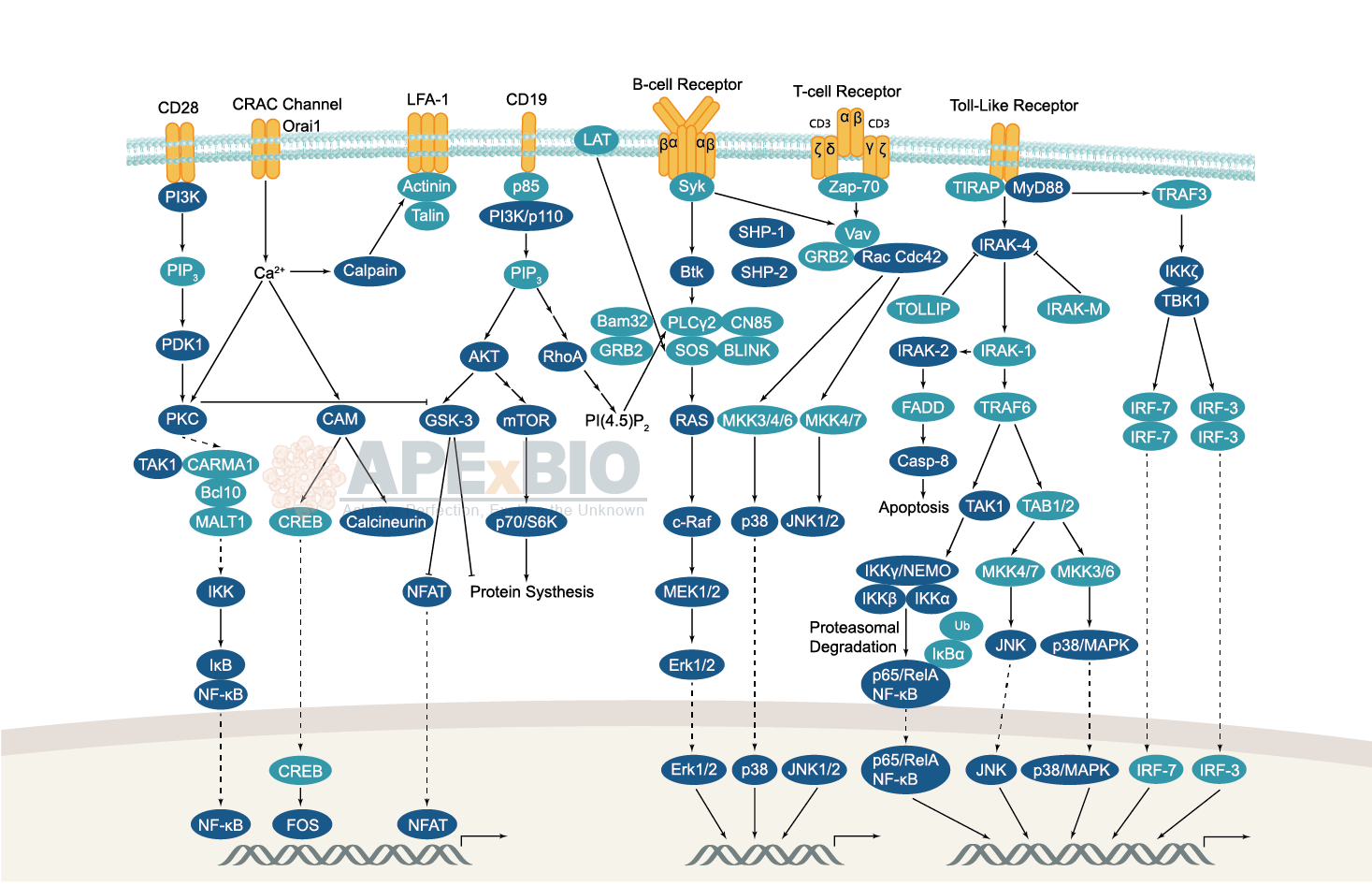
The adaptive immune system consists of B and T lymphocytes which mediate humoral immunity (e.g. antibody response) and cell-mediated immunity, respectively. B cell receptor and T cell receptor signaling is responsible for activation of Src family tyrosine kinases, such as Blk, Fyn, and Lyn in B cells and Fyn and Lck in T cells, resulting phosphorylation of the receptor-associated ITAM motifs. Phosphorylated ITAMs serve as the docking sites for Syk family tyrosine kinases, e.g. Syk in B cells and Zap-70 in T cells. Activated Syk kinases then propagate the signals via phosphorylation of downstream proteins. Furthermore, lymphocyte receptor signaling facilitates B and T cell development, differentiation, proliferation and survival.
-
 BA4433 AlpinetinSummary: Alpinetin is a flavonoid isolated from Myristica fragrans.
 -
BA4437 ErtiprotafibSummary: Ertiprotafib is an inhibitor.
-
BA4442 MonascinSummary: Monascin is an azurophilic pigment that can be extracted from red yeast rice and is orally active with antitumor and anti-inflammatory activities.
-
BA4457 ConvallatoxinSummary: Convallatoxin is a cardiac glycoside isolated from RegeletRadde.
-
BA4458 25-Hydroxytachysterol3Summary: 25-Hydroxytachysterol3 is the metabolite.
-
BA4472 CaulophyllogeninSummary: Caulophyllogenin is a triterpenoid saponin.
-
BA4543 IsosteviolSummary: Isosteviol ((-)-Isosteviol) is a steviol glycoside derivative that is produced by acid-catalyzed hydrolysis of steviol glycosides.
-
BA4544 GroenlandicineSummary: Groenlandicine is a proto-berberine alkaloid isolated from Rhizoma Coptidis.
-
BA4637 IMM-H007Summary: IMM-H007 (WS070117) is an orally effective (AMP-activated protein kinase) activator and (transforming growth factor beta 1) antagonist.
-
BA5730 DaltrobanSummary: Daltroban (BM-13505) is a selective and specific thromboxane A2 receptor antagonist.