


DNA Damage/DNA Repair
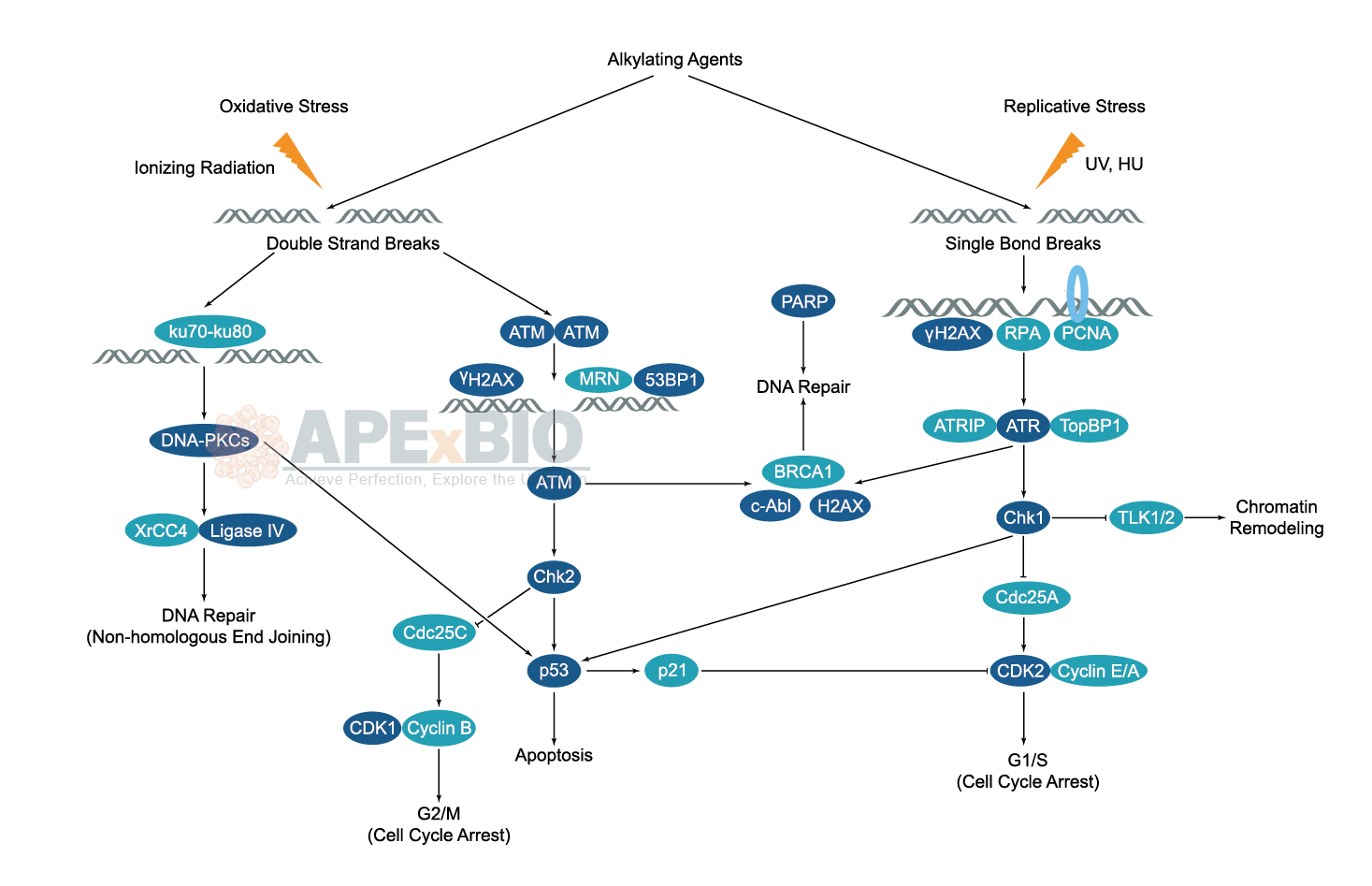
The DNA in a human cell receives tens of thousands of damages per day due to both external (exogenous) and internal (endogenous) stress. The exogenous damages are caused by chemical contamination, UV light, ionizing radiation and alkylation/methylation etc, while the endogenous damages are coming from oxidation, alkylation and hydrolysis of bases etc. Since single strand and double strand breaks of DNA will occur after the damage, unrepaired DNA damage leads to cell senescent, apoptosis and malignancies etc. To overcome this threat, cell has developed DNA damage response, to detect DNA damage and mediate its repair.
DNA repair involves multiple mechanisms such as mismatch, base excision, and nucleotide excision repair etc. A group of proteins and pathways are participated in those processes. ATM/ATR kinases and DNA-PK are crucial for the detection of the DNA damage. Chromatin remodelers regulate chromatin accessibility for the DNA repair factors to function. RPA, Rad51 and the fanconi anemia proteins act directly on repairing the DNA damage. p53 network, the RAS GTPase superfamily, and the ubiquitin system also play important part in the DNA damage response. Aberrant DNA damage response is linked to aging, cancer and immune diseases.
-
 BA4305 N1-Methyl-2-deoxyadenosineSummary: N1-Methyl-2'-deoxyadenosine,DNAadduct is a purine nucleoside analog.
 -
BA4308 5-Methoxycarbonylmethyl-2-O-methyluridineSummary: 5-Methoxycarbonylmethyl-2'-O-methyluridine is a thymine nucleoside analog.
-
BA4311 IsoguanineSummary: Isoguanine is a purine base, an isomer of guanine.
-
BA4312 5-Deoxy-5-iodouridineSummary: 5'-Deoxy-5'-iodouridine is a purine nucleoside analog.
-
BA4314 α-CytidineSummary: Alpha-Cytidine is a purine nucleoside analog.
-
BA4315 Alpha-GuanosineSummary: Alpha-Guanosine is a purine nucleoside analog.
-
BA4316 N-PropargyladenosineSummary: N-Propargyladenosine is an adenine nucleoside analog.
-
BA4318 5-EthyluridineSummary: 5-Ethyluridine is a purine nucleoside analog.
-
BA4320 3-Azido-3-deoxyadenosineSummary: 3'-Azido-3'-deoxyadenosine is a purine nucleoside analog.
-
BA4321 2-ThiothymidineSummary: 2-Thiothymidine is a purine nucleoside analog.