


Anti-infection
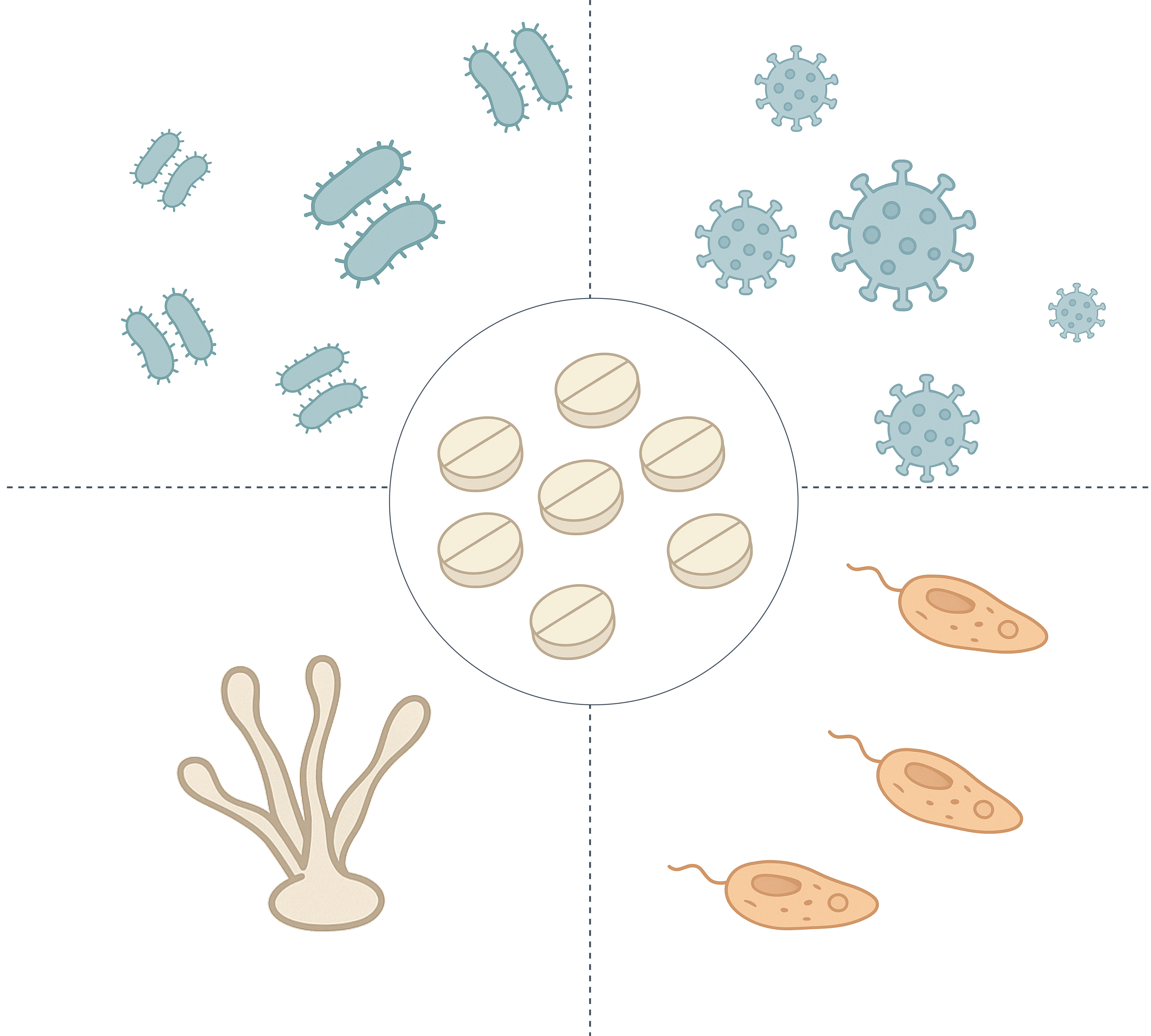
Anti-infectives are agents that eliminate or inhibit the spread of infectious organisms, encompassing antibiotics, antifungals, antivirals, and antiprotozoals.
Antibiotics are a class of antimicrobial agents specifically designed to target bacterial pathogens. They exert their effects by interfering with essential bacterial processes such as cell wall synthesis, protein synthesis, nucleic acid replication, and metabolic pathways, thereby either inhibiting bacterial growth or inducing bacterial death.
Antifungals are antimicrobial agents employed to combat fungal infections (mycoses) in humans and animals. Common antifungal classes include azoles, polyenes, echinocandins, and allylamines, which function by disrupting unique fungal structures or pathways, such as the synthesis or integrity of ergosterol-containing cell membranes and β-glucan-based cell walls, or by interfering with nucleic acid or protein synthesis.
Antivirals are compounds developed to inhibit the replication and spread of viruses within host organisms. Antivirals typically act by blocking viral entry, genome replication, protein processing, or virion assembly and release. Representative examples include nucleoside analogs, protease inhibitors, and neuraminidase inhibitors.
Antiprotozoals are drugs used to treat infections caused by protozoan parasites, including malaria, amebiasis, giardiasis, and trypanosomiasis. They act through a variety of mechanisms, including inhibition of nucleic acid synthesis, interference with mitochondrial function, and disruption of heme detoxification pathways in susceptible parasites.
-
 BA1472 BC-7013Summary: BC-7013 is a semi-synthetic thymic residual amino acid derivative.
 -
BA1473 H-Lys-Trp-Lys-OHSummary: A small molecule peptide with antibacterial and antiviral activity.
-
BA1474 IMPDH2-IN-2Summary: IMPDH2-IN-2 is a potent inhibitor of inosine 5'-monophosphate dehydrogenase.
-
BA1475 SQ609Summary: SQ609 is a lead compound from the dipiperidine library.
-
BA1476 MegazolSummary: Megazol is an antimicrobial agent with oral activity.
-
BA1477 PagibaximabSummary: Pagibaximab is a chimeric antibody that recognizes fatty acids that are surface components of Staphylococcus aureus and Streptococcus epidermidis.
-
BA1478 PachybasinSummary: Pachybasin is a major metabolite in cultures of the endophytic Coelomyceteous AFKR-18 fungus.
-
BA1479 HamamelitanninSummary: Hamamelitannin is a polyphenol extracted from the bark of the tree and is a group sensing inhibitor.
-
BA1480 CarabroneSummary: Carabrone aspalathinolactone isolated from the fruit of is a sesquiterpene with significant antibacterial and antitumor activity.
-
BA1481 MA220607Summary: MA220607 is a low hemolytic toxicity antimicrobial agent with a dual-targeted mechanism of action (MOA).