


Anti-infection
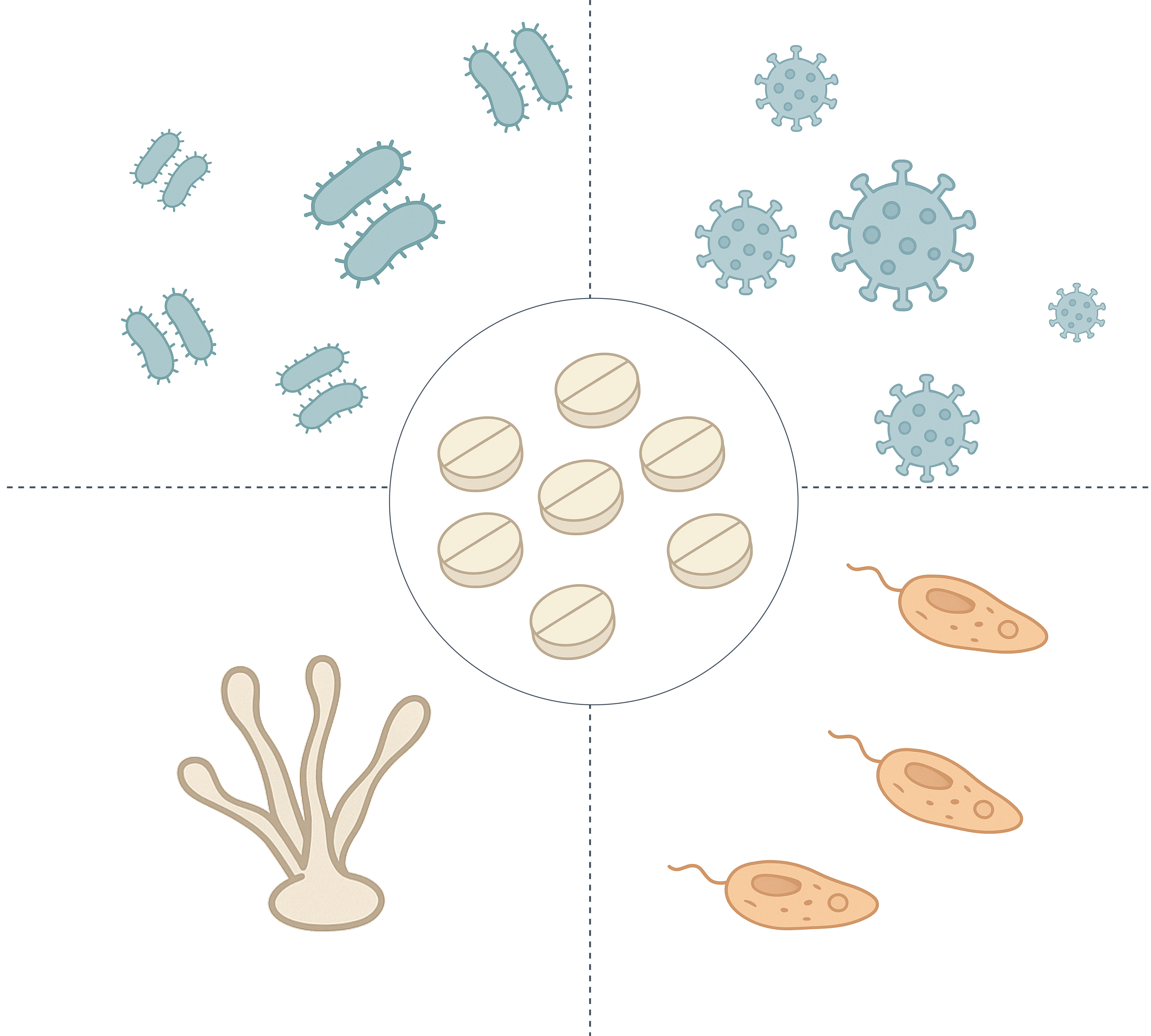
Anti-infectives are agents that eliminate or inhibit the spread of infectious organisms, encompassing antibiotics, antifungals, antivirals, and antiprotozoals.
Antibiotics are a class of antimicrobial agents specifically designed to target bacterial pathogens. They exert their effects by interfering with essential bacterial processes such as cell wall synthesis, protein synthesis, nucleic acid replication, and metabolic pathways, thereby either inhibiting bacterial growth or inducing bacterial death.
Antifungals are antimicrobial agents employed to combat fungal infections (mycoses) in humans and animals. Common antifungal classes include azoles, polyenes, echinocandins, and allylamines, which function by disrupting unique fungal structures or pathways, such as the synthesis or integrity of ergosterol-containing cell membranes and β-glucan-based cell walls, or by interfering with nucleic acid or protein synthesis.
Antivirals are compounds developed to inhibit the replication and spread of viruses within host organisms. Antivirals typically act by blocking viral entry, genome replication, protein processing, or virion assembly and release. Representative examples include nucleoside analogs, protease inhibitors, and neuraminidase inhibitors.
Antiprotozoals are drugs used to treat infections caused by protozoan parasites, including malaria, amebiasis, giardiasis, and trypanosomiasis. They act through a variety of mechanisms, including inhibition of nucleic acid synthesis, interference with mitochondrial function, and disruption of heme detoxification pathways in susceptible parasites.
-
 BA1235 CoixolSummary: Coixol (6-Methoxy-2-benzoxazolinone; 6-MBOA) is a polyphenol extracted from Coix lacryma.
 -
BA1237 CamalexinSummary: Camalexin is a plant antitoxin isolated from (Cruciferae) with antibacterial, antifungal, antiproliferative and anticancer activities.
-
BA1238 T-91825Summary: T-91825 (PPI-0903M) is an N-phosphono-type cephalosporin that is the active form of TAK-599.
-
BA1239 AfzelinSummary: Afzelin (Kaempferol-3-O-rhamnoside) is a flavonol glycoside with anti-inflammatory, antioxidant stress response, anti-apoptotic, and anti-cardiac cytotoxic properties.
-
BA1240 GW779439XSummary: GW779439X, a pyrazolopyridine analog, is a Staphylococcus aureus PASTA kinase inhibitor.
-
BA1241 PyraclostrobinSummary: Pyraclostrobin is a highly effective broad-spectrum fungicide, Pyraclostrobin induces oxidative DNA damage, mitochondrial dysfunction and autophagy through activation/signaling pathways.
-
BA1242 LysozymeSummary: Lysozyme (EC 3.2.1.17) is a component of the innate immune system produced in animals.
-
BA1244 AcetylshikoninSummary: Acetylshikonin is an orally effective anticancer, anti-inflammatory, antioxidant, antifertility, bacteriostatic and neuroprotective agent.
-
BA1246 DeoxyshikoninSummary: Deoxyshikonin increases HMVEC-dLy neutralizing mRNA expression, promotes HIF-1α and HIF-1β subunit interactions, and binds to specific DNA sequences.
-
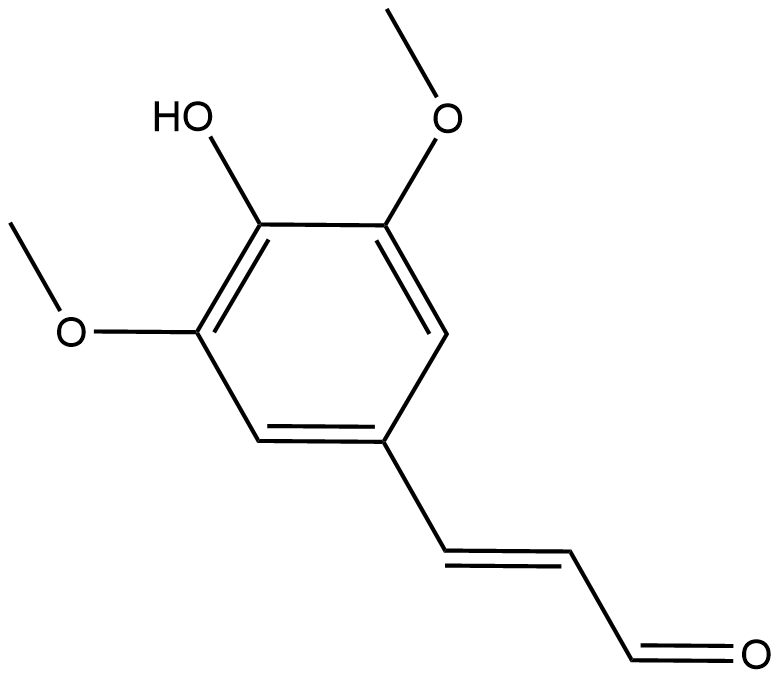 BA1247 SinapaldehydeSummary: A plant-derived methoxyphenol and selective COX-2 inhibitor with antibacterial, anti-inflammatory, and antioxidant activities