


Anti-infection
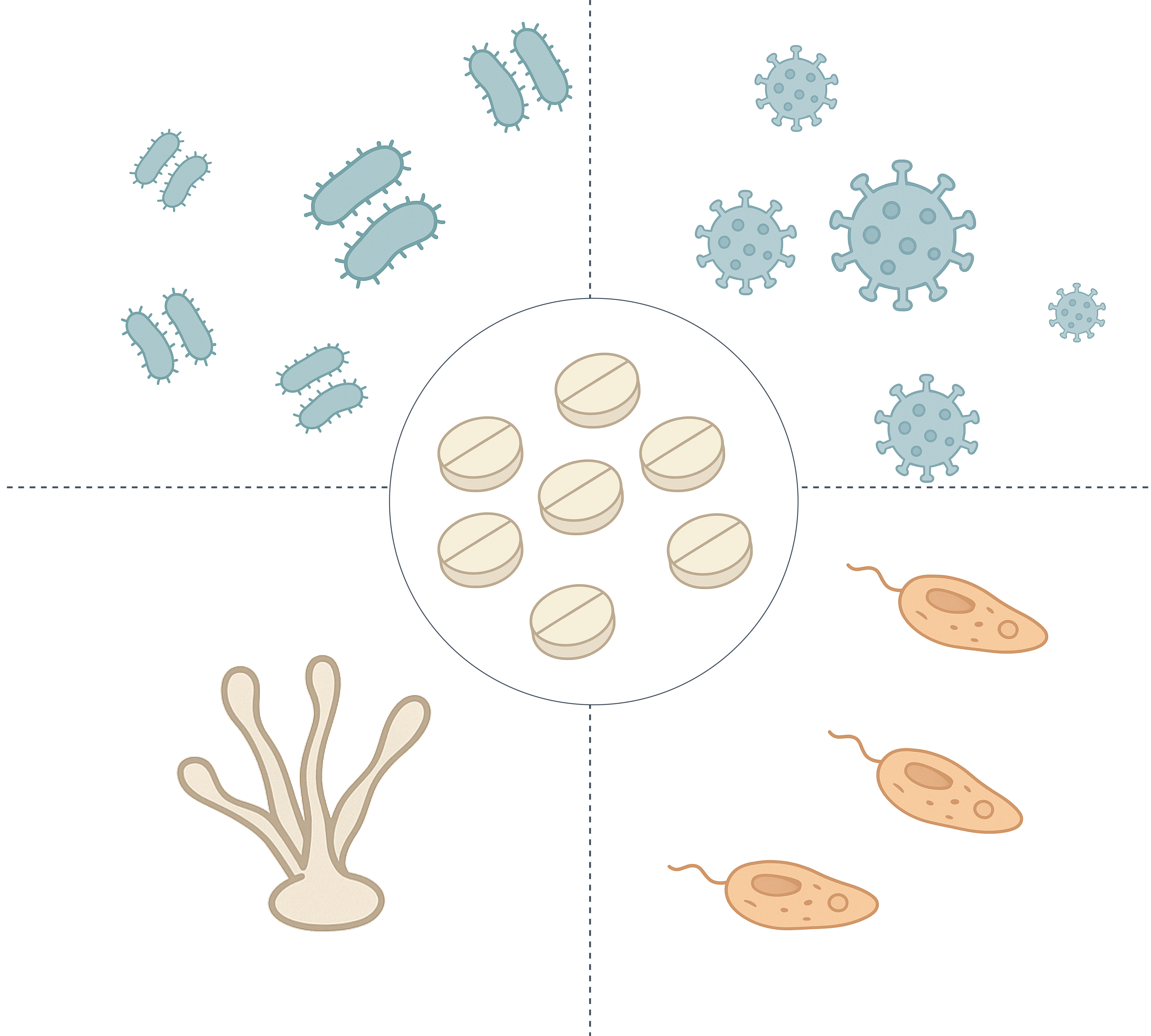
Anti-infectives are agents that eliminate or inhibit the spread of infectious organisms, encompassing antibiotics, antifungals, antivirals, and antiprotozoals.
Antibiotics are a class of antimicrobial agents specifically designed to target bacterial pathogens. They exert their effects by interfering with essential bacterial processes such as cell wall synthesis, protein synthesis, nucleic acid replication, and metabolic pathways, thereby either inhibiting bacterial growth or inducing bacterial death.
Antifungals are antimicrobial agents employed to combat fungal infections (mycoses) in humans and animals. Common antifungal classes include azoles, polyenes, echinocandins, and allylamines, which function by disrupting unique fungal structures or pathways, such as the synthesis or integrity of ergosterol-containing cell membranes and β-glucan-based cell walls, or by interfering with nucleic acid or protein synthesis.
Antivirals are compounds developed to inhibit the replication and spread of viruses within host organisms. Antivirals typically act by blocking viral entry, genome replication, protein processing, or virion assembly and release. Representative examples include nucleoside analogs, protease inhibitors, and neuraminidase inhibitors.
Antiprotozoals are drugs used to treat infections caused by protozoan parasites, including malaria, amebiasis, giardiasis, and trypanosomiasis. They act through a variety of mechanisms, including inhibition of nucleic acid synthesis, interference with mitochondrial function, and disruption of heme detoxification pathways in susceptible parasites.
-
 BA1905 PF-3450074Summary: PF-3450074 (PF-74) is a specific inhibitor of the HIV-1 coat protein and exhibits broad-spectrum inhibition of isolates
 -
BA1906 DDX3-IN-2Summary: DDX3-IN-2 is an active DEADboxpolypeptide3 inhibitor with a value of 0.3 μM.
-
BA1908 MS417Summary: MS417 is a selective inhibitor of BET-specific proteins.
-
BA1909 GPI-1046Summary: GPI-1046, an immunoaffinity ligand without antibiotic effects, reduces ethanol intake by upregulating glutamate transporter protein 1 in the PFC and NAc core.
-
BA1910 CyclotriazadisulfonamideSummary: Cyclotriazadisulfonamide (CADA) is a specifically targeted entry inhibitor.
-
BA1912 LDC4297Summary: LDC4297 is a selective inhibitor.
-
BA1913 TrilobatinSummary: Trilobatin is a sweetener derived from Rehd, Trilobatin is an inhibitor that targets the Gp41 envelope protein.
-
BA1914 ZL0580Summary: ZL0580 is a structural analog of ZL0590 and induces epitope inhibition by selective binding to the structural domain of BD1.
-
BA1915 FosamprenavirSummary: Fosamprenavir (Amprenavirphosphate; GW433908) is a phosphate precursor of the antiretroviral protease inhibitor Amprenavir with improved solubility.
-
BA1916 DiphyllinSummary: Diphyllin, an arylnaphthalene lignan, is a potent inhibitor.