


Anti-infection
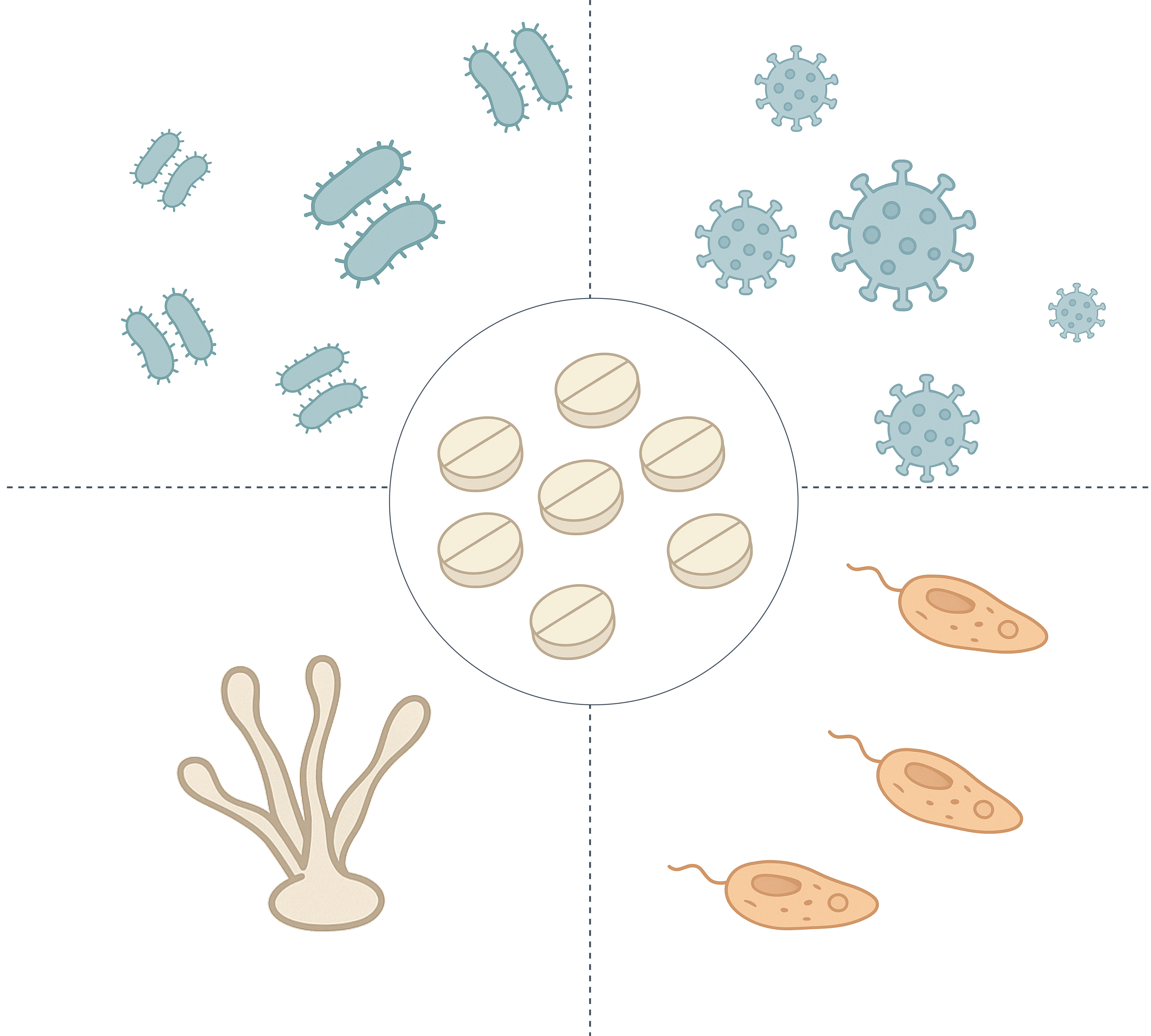
Anti-infectives are agents that eliminate or inhibit the spread of infectious organisms, encompassing antibiotics, antifungals, antivirals, and antiprotozoals.
Antibiotics are a class of antimicrobial agents specifically designed to target bacterial pathogens. They exert their effects by interfering with essential bacterial processes such as cell wall synthesis, protein synthesis, nucleic acid replication, and metabolic pathways, thereby either inhibiting bacterial growth or inducing bacterial death.
Antifungals are antimicrobial agents employed to combat fungal infections (mycoses) in humans and animals. Common antifungal classes include azoles, polyenes, echinocandins, and allylamines, which function by disrupting unique fungal structures or pathways, such as the synthesis or integrity of ergosterol-containing cell membranes and β-glucan-based cell walls, or by interfering with nucleic acid or protein synthesis.
Antivirals are compounds developed to inhibit the replication and spread of viruses within host organisms. Antivirals typically act by blocking viral entry, genome replication, protein processing, or virion assembly and release. Representative examples include nucleoside analogs, protease inhibitors, and neuraminidase inhibitors.
Antiprotozoals are drugs used to treat infections caused by protozoan parasites, including malaria, amebiasis, giardiasis, and trypanosomiasis. They act through a variety of mechanisms, including inhibition of nucleic acid synthesis, interference with mitochondrial function, and disruption of heme detoxification pathways in susceptible parasites.
-
 BA1337 GolotimodSummary: Golotimod (SCV07) an immunomodulatory peptide with antimicrobial activity, significantly improves the efficacy of anti-tuberculosis studies, stimulates thymic and splenocyte proliferation, and improves macrophage function.
 -
BA1338 MUT056399Summary: MUT056399 (Fab-001) efficiently inhibits Staphylococcus aureus and Escherichia coli.
-
BA1339 Chitinase, serratia marcescensSummary: Chitinase (EC 3.2.1.14) has partially lysozyme activity and is widely found in bacteria, fungi, animals and some plants.
-
BA1340 CurzerenoneSummary: Curzerenone is one of the components of Tibetan Fishing Camphor Leaf Extract Essential Oil.
-
BA1341 XanthoangelolSummary: Xanthoangelol inhibits obesity-induced inflammatory responses.
-
BA1342 TP0586532Summary: TP0586532 was an inhibitor (=0.101 μM).
-
BA1343 OmbuosideSummary: Ombuoside is a glycoside complex isolated from gibberellic acid.
-
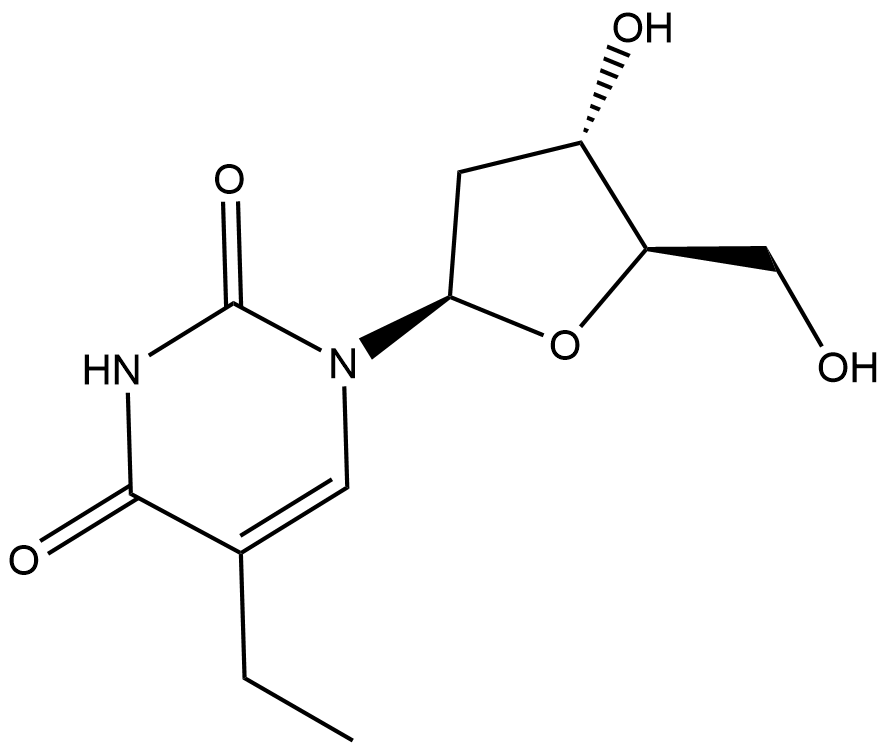 BA1345 EdoxudineSummary: Edoxudine is an antiviral active molecule, a thymidine analog.
 -
BA1346 TH-Z93Summary: TH-Z93, a lipophilic bisphosphonate, is an inhibitor.
-
BA1347 MK-3402Summary: MK-3402 is an inhibitor.