


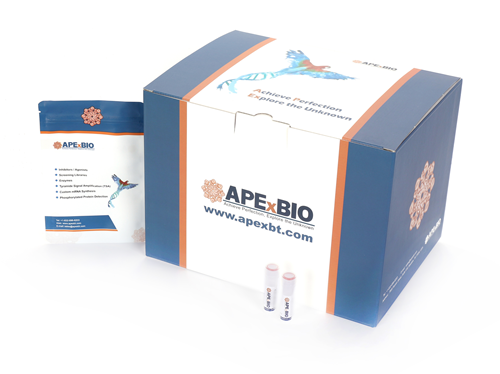
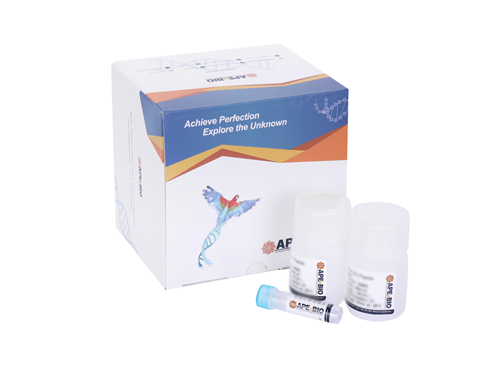
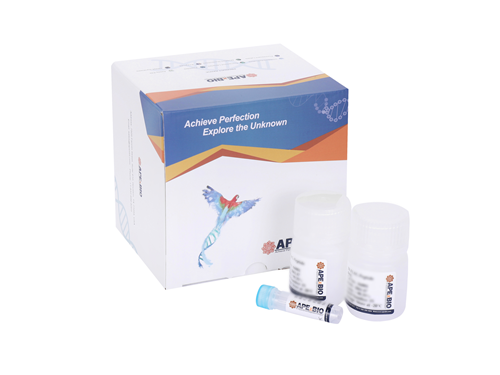
SuperSignal ECL Chemiluminescent Substrate Detection Kit (Ultrasensitive)
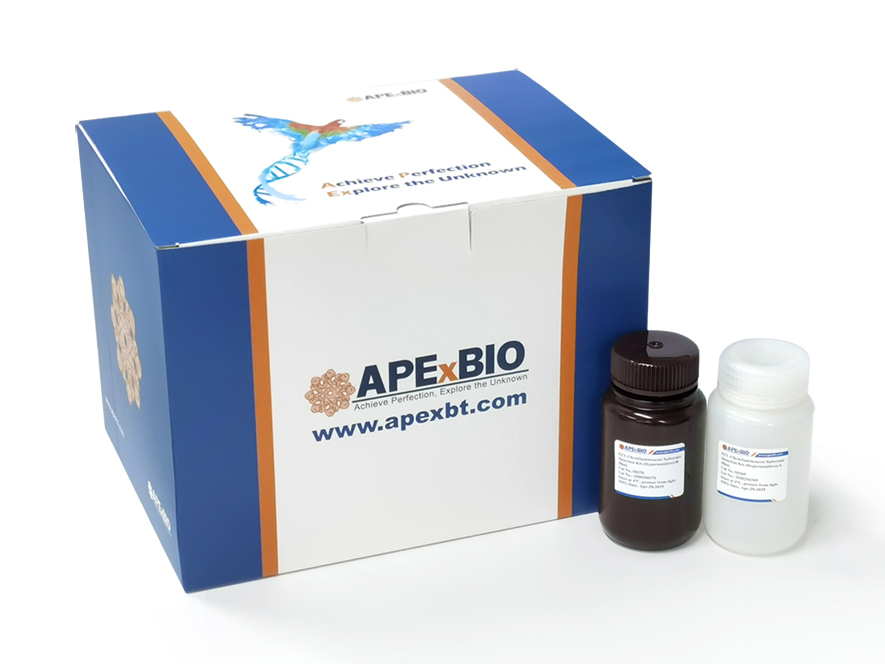
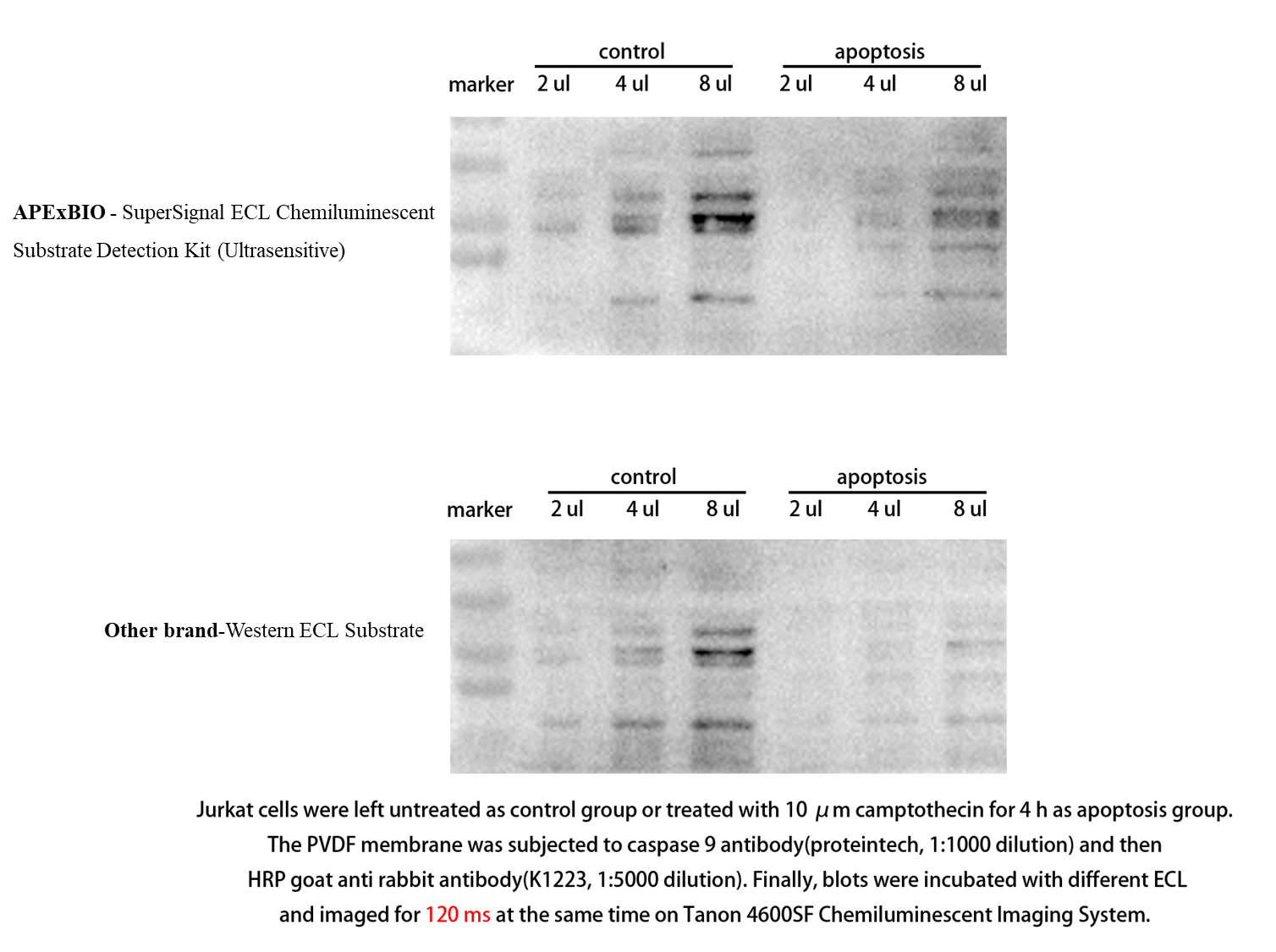
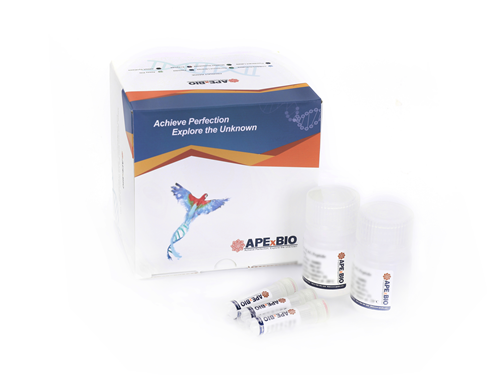
SuperSignal ECL Chemiluminescent Substrate Detection Kit (Ultrasensitive) is an enhanced chemiluminescence (ECL) substrate with ultra-high sensitivity and an ECL luminescent liquid with ultra-long luminescence time of up to 16 h. HRP can achieve low femtogram (based on HRP concentration) western blot detection, and its sensitivity, luminescence time and background are obviously excellent.
It has the following characteristics:
(1) Sensitive: Femtogram-grade protein bands can be detected on nitrocellulose or PVDF membranes when appropriate primary and secondary antibodies are used.
(2) Quantification: The quantifiable range of the resulting signal spans two orders of magnitude.
(3) Bright signal: Exposure through film or imaging system for easy image capture.
(4) Long signal duration: Detectable optical signal output up to 16 hours under optimized conditions.
(5) Stabilized reagents: Kit components can be stable at 4°C for one year and at room temperature for 6 months.
(6) Affordable: Formulated to be optimized for very low concentration antibody detection.
When this product substrate is used in conjunction with optimized antibody concentrations and blocking buffers, low-abundance target proteins that cannot be detected by conventional ECL substrates can be detected.
- 1. Lina Wang, Yanlei Zhang, et al. "A Multi‐Targeting Chimeric Antigen Receptor‐T Cell Platform to Overcome Antigen Heterogeneity in the Treatment of Non‐Small Cell Lung Cancer." Adv Sci (Weinh). 2026 Sep 27:e77992. PMID: 42801642
- 2. Ziheng Huang MSc, Huiqin Zhou MD, et al. "Multi-omics and machine learning identify ALOX5 as a ferroptosis-associated driver of epithelial barrier dysfunction in chronic rhinosinusitis with nasal polyps." World Allergy Organization Journal September 2026
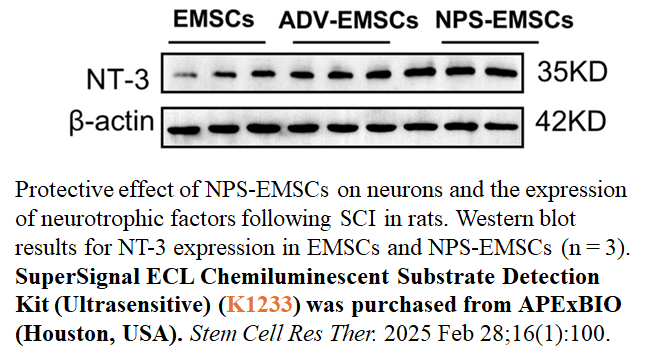
- 3. Wenhui Yang, Yilu Li, et al. "Mesenchymal stem cells overexpressing neuropeptide S promote the recovery of rats with spinal cord injury by activating the PI3K/AKT/GSK3β signaling pathway." Stem Cell Res Ther.2025 Feb 28;16(1):100. PMID: 40022159
Related Biological Data
Related Biological Data
| Components | 100 mL | 500 mL |
| SuperSignal ECL Chemiluminescent Substrate Detection Kit (Ultrasensitive) -A | 50 mL | 250 mL |
| SuperSignal ECL Chemiluminescent Substrate Detection Kit (Ultrasensitive) -B | 50 mL | 250 mL |
Store the components dry at 4 °C and protect from light for 12 months. | ||
1. What causes an inverted image on the film, i.e., black background with white bands?
A: This is usually caused by an excessive amount of HRP in the system, which rapidly depletes the substrate. It is recommended to dilute the HRP-conjugated secondary antibody at least 10-fold to effectively resolve this issue.
2. What causes brown or yellow bands on the membrane?
A: This phenomenon is often related to suboptimal chemiluminescent development conditions, such as overly long substrate incubation or exposure times, or substrate degradation/precipitation under light. Shortening the development/exposure time and optimizing the detection conditions can alleviate this issue.
3. If the chemiluminescent signal lasts less than 8 hours, what could be the reason?
A: An excessively short signal duration is usually caused by too much HRP in the system, which rapidly depletes the substrate and leads to quick signal decay. The solution is to dilute the HRP-conjugated secondary antibody at least 10-fold.
4. If the signal is weak or absent, what are the possible causes and how can this be resolved?
A: Common causes and corresponding solutions include:
· Excessive HRP in the system (substrate depleted quickly, signal decays rapidly): dilute the HRP-conjugated secondary antibody at least 10-fold.
· Insufficient amount of antigen or antibody: increase the concentration of antigen or antibody accordingly.
· Low protein transfer efficiency: optimize transfer conditions (e.g., transfer time, current/voltage, buffer composition).
· Reduced HRP or substrate activity: perform activity testing to confirm and replace inactivated reagents.
5. If the background is too high, what are the possible causes and how can this be resolved?
A: Common causes of high background and corresponding solutions include:
· Excessive HRP in the system: dilute the HRP-conjugated secondary antibody at least 10-fold.
· Insufficient blocking: optimize blocking conditions, such as extending blocking time, adjusting blocking temperature, or shaking speed.
· Inappropriate blocking reagent: try different blocking reagents, such as non-fat dry milk, BSA, or serum.
· Inadequate washing: increase the number of washes, extend washing time, or increase the volume of wash buffer.
· Overexposure of the film: shorten the exposure time and, if necessary, use a background-reduction reagent.
· Excessive antigen or antibody concentration: reduce the amount of antigen or antibody accordingly.
6. What causes spots within the protein bands, and how can this be resolved?
A: Common causes and corresponding solutions include:
· Uneven or inefficient protein transfer: optimize the transfer procedure, e.g., check transfer voltage, time, and buffer composition to ensure uniform transfer.
· Uneven membrane hydration: fully equilibrate/hydrate the membrane according to the manufacturer's instructions to avoid local dryness or insufficient hydration.
· Air bubbles between the film and membrane: carefully remove any bubbles before exposure to ensure close contact between the membrane and film.
7. What causes speckled background on the film, and how can this be resolved?
A: Speckled background is usually caused by aggregates present in the HRP-conjugated secondary antibody solution. The solution is to filter the secondary antibody working solution through a 0.2 µm filter before use to remove aggregates.
8. What causes non-specific bands, and how can this be resolved?
A: Common causes and corresponding solutions include:
· Excessive HRP in the system: dilute the HRP-conjugated secondary antibody at least 10-fold to reduce non-specific binding signals.
· SDS-induced non-specific protein binding: avoid using SDS during the detection steps (antibody incubation and chemiluminescent detection).
9. How can the activity of the HRP/substrate system be tested?
A: The activity can be tested as follows:
· In a darkroom, prepare 1–2 mL of substrate working solution in a clean test tube.
· Turn off the lights.
· Add 1 µL of undiluted HRP-conjugated secondary antibody working solution.
Expected result: If the system is active, the solution should immediately emit blue light, and the blue signal will gradually fade over the next few minutes.
-
-
 F4005 Prestained Protein Marker (Triple color, EDTA free, 10-250 kDa)
Starting at $50.00
-
-
-
-
-
-
-
-
-
-
-
-
-
-