

Tetracycline Hydrochloride
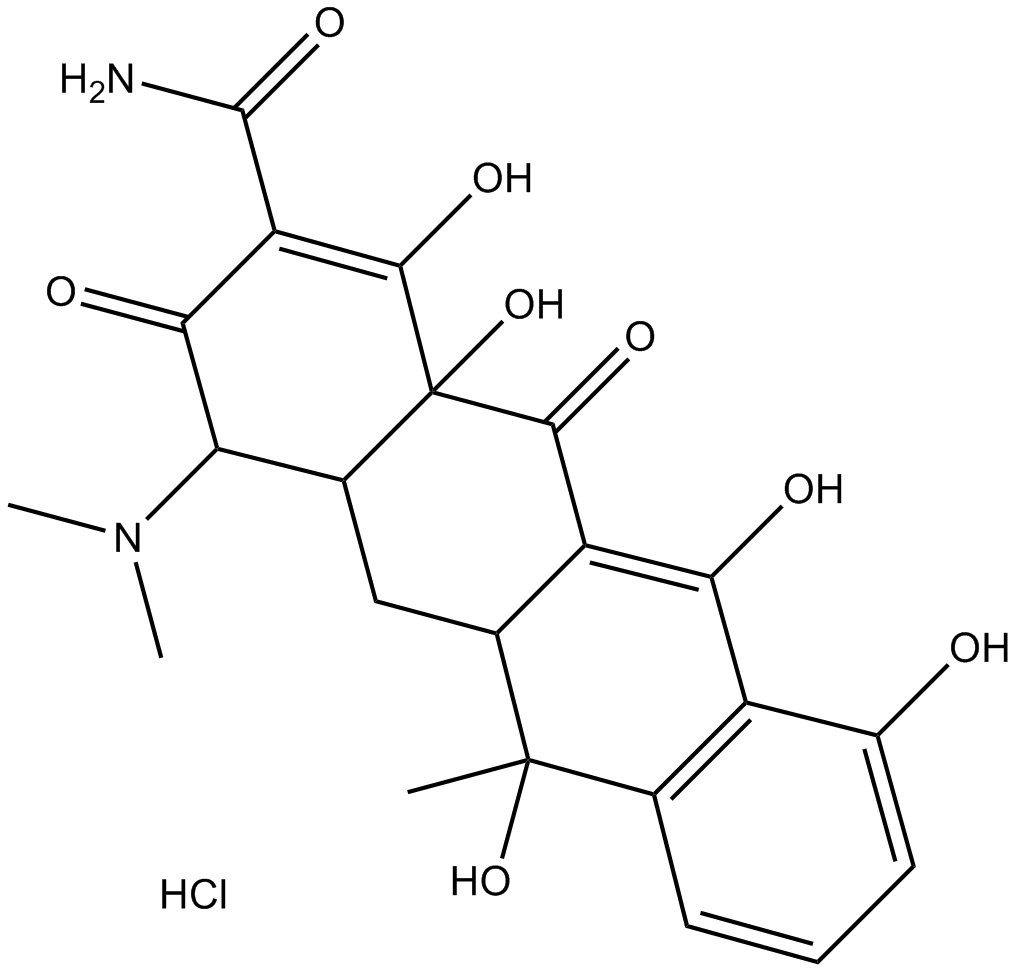
Tetracycline Hydrochloride (CAS 64-75-5) is a bacterial ribosome inhibitor (bacteriostatic antibiotic)[1].
Tetracycline Hydrochloride inhibits translation by binding to 16S rRNA and preventing the binding of aminoacyl-tRNA to the mRNA-ribosome complex; however, its precise target site and mechanism of action remain controversial[1].
At concentrations of 0, 10, 25, 50, 75, 150, 225, and 300 µM, the antibacterial activity of tetracycline hydrochloride against drug-resistant Staphylococcus aureus (S. aureus) increases progressively. After 6 h of treatment, the statistically estimated IC50 values of tetracycline hydrochloride against S. aureus, cadmium-resistant S. aureus, and lead-resistant S. aureus are 4.8, 3.8, and 2.2 µM, respectively[2].
In subjects with baseline Propionibacterium acnes (P. acnes) levels of at least 10000 colony-forming units/cm2, tetracycline hydrochloride treatment (1000 mg/day, twice daily, orally) for 6 weeks significantly reduces P. acnes on both cheeks and the forehead at weeks 3 and 6, but with almost no residual effect; at week 9, the P. acnes levels in the tetracycline hydrochloride group return to baseline[3].
Intraperitoneal injection of tetracycline hydrochloride combined with a high-fat diet induces non-alcoholic steatohepatitis (NASH) in mice, making it a commonly used chemically induced fatty liver model.
References
[1]. Chukwudi C U. rRNA Binding Sites and the Molecular Mechanism of Action of the Tetracyclines. Antimicrobial Agents and Chemotherapy, 2016, 60(8): 4433-4441.
[2]. Chudobova D, Dostalova S, Blazkova I, et al. Effect of ampicillin, streptomycin, penicillin and tetracycline on metal resistant and non-resistant Staphylococcus aureus. International Journal of Environmental Research and Public Health, 2014, 11(3): 3233-3255.
[3]. Leyden J J, Kaidbey K, Gans E H. The antimicrobial effects in vivo of minocycline, doxycycline and tetracycline in humans. Journal of Dermatological Treatment, 1996, 7: 223-225.
- 1. Yongbin Liu, Dongfang Yu, et al. "Novel platinum therapeutics induce rapid cancer cell death through triggering intracellular ROS storm." Biomaterials. 2024 Sep 11:314:122835. PMID: 39276409
- 2. Shen X, Zhao Y, et al. "Upregulation of programmed death ligand 1 by liver kinase B1 and its implication in programmed death 1 blockade therapy in non-small cell lung cancer." Life Sci. 2020;256:117923 PMID: 32522567
| Storage | Store at -20°C |
| M.Wt | 480.90 |
| Cas No. | 64-75-5 |
| Formula | C22H25ClN2O8 |
| Synonyms | Tetracycline hydrochloride |
| Solubility | insoluble in EtOH; ≥12.02 mg/mL in DMSO with gentle warming; ≥57.7 mg/mL in H2O |
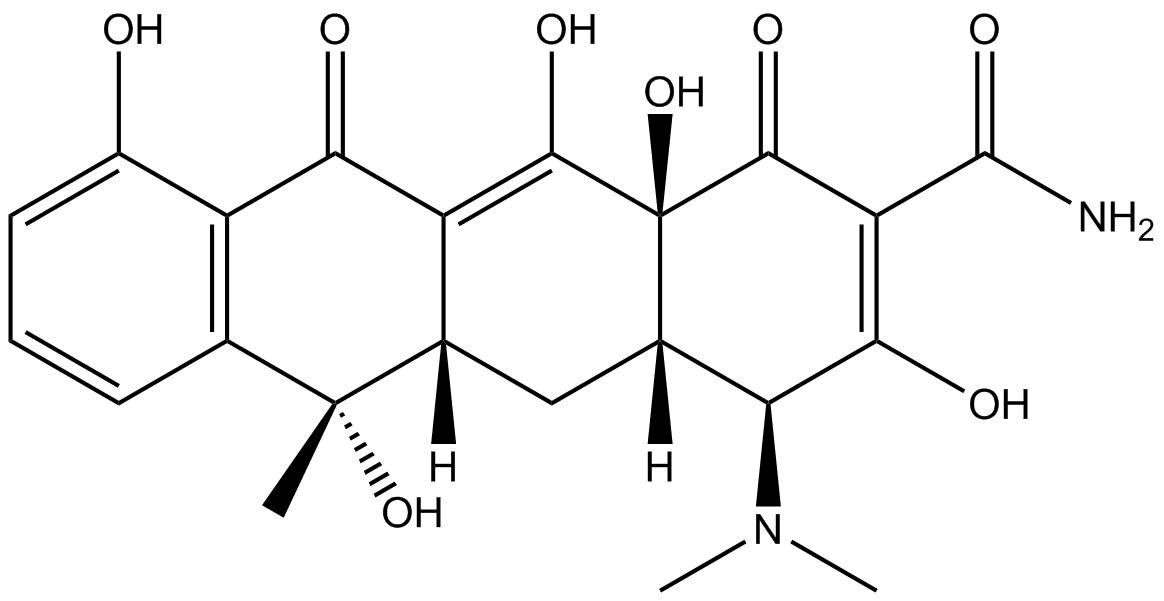
| Chemical Name | (4S,4aS,5aS,6S,12aR)-4-(dimethylamino)-1,6,10,11,12a-pentahydroxy-6-methyl-3,12-dioxo-4,4a,5,5a-tetrahydrotetracene-2-carboxamide;hydrochloride |
| Canonical SMILES | CC(C1CC(C(C(C(C(N)=O)=C2O)=O)N(C)C)C22O)(c3cccc(O)c3C(O)=C1C2=O)O.Cl |
| Shipping Condition | Small Molecules with Blue Ice, Modified Nucleotides with Dry Ice. |
| General tips | We do not recommend long-term storage for the solution, please use it up soon. |
Quality Control & MSDS
- View current batch:
Chemical structure

Related Biological Data