

Progesterone
Progesterone (CAS 57-83-0) is a key hormone for maintaining pregnancy, the menstrual cycle, the endometrium, and its receptor functions [1]. Progesterone binds to the progesterone receptor to maintain pregnancy and the menstrual cycle; in modeling, it is an essential progestogenic component of artificially induced decidualization models, and its withdrawal administration is used to establish premenstrual dysphoric disorder (PMDD)-like models.
Progesterone participates in establishing uterine receptivity for embryo implantation. Together with the nuclear progesterone receptor, progesterone attenuates the effects of E2 and BPA on Egr1 expression [2]. In tests with mouse melanoma (B16F10) cells and human melanoma (BLM) cells, progesterone treatment significantly inhibits mouse melanoma cell growth [3]. In MCF-7 cells, progesterone activates GLI-1 in a RANKL-dependent manner to modulate estrogen-induced breast cancer [4].
In rats (subcutaneously pretreated with progesterone or peanut oil for 5 days starting on day 17 of gestation, plus controls), progesterone treatment at 400 and 500 μg/day enhances opioid-suppressed maternal behavior [1].
Progesterone exerts neuroprotective effects by regulating Akt phosphorylation, and Akt plays a key role in promoting cell growth in the brain. To evaluate the effect of progesterone on Akt phosphorylation, in C57BL/6 mice with closed-skull traumatic brain injury, progesterone treatment increases Akt phosphorylation in the hippocampus compared with the traumatic brain injury vehicle-treated group [5]. In female rats, progesterone treatment asymmetrically regulates the expression of the GABA(A) receptor alpha4 subunit in the olfactory bulb [6].
References: [1]. Cruz, A.M., M.H. Sukikara, and F.F. L, Late pregnancy progesterone treatment as a modulatory signal for postpartum behavior. Pharmacol Biochem Behav, 2014. 27(14): p. 00348-7.
[2]. Kim, H.R., et al., Egr1 is rapidly and transiently induced by estrogen and bisphenol A via activation of nuclear estrogen receptor-dependent ERK1/2 pathway in the uterus. Reprod Toxicol, 2014. 50: p. 60-7.
[3]. Ramaraj, P. and J.L. Cox, In vitro effect of progesterone on human melanoma (BLM) cell growth. Int J Clin Exp Med, 2014. 7(11): p. 3941-53.
[4]. Boopalan, T., et al., RANKL signaling promotes progesterone mediated estrogen induced mammary carcinogenesis. Cancer Sci, 2014. 21(10): p. 12571.
[5]. Garling, R.J., et al., Does progesterone show neuroprotective effects on traumatic brain injury through increasing phosphorylation of Akt in the hippocampus Neural Regen Res, 2014. 9(21): p. 1891-6.
[6]. Arbo, B.D., et al., Asymmetric effects of low doses of progesterone on GABA(A) receptor alpha4 subunit protein expression in the olfactory bulb of female rats. Can J Physiol Pharmacol, 2014. 92(12): p. 1045-9.
| Physical Appearance | A solid |
| Storage | Store at -20°C |
| M.Wt | 314.46 |
| Cas No. | 57-83-0 |
| Formula | C21H30O2 |
| Solubility | insoluble in H2O; ≥14.65 mg/mL in DMSO; ≥47.3 mg/mL in EtOH |
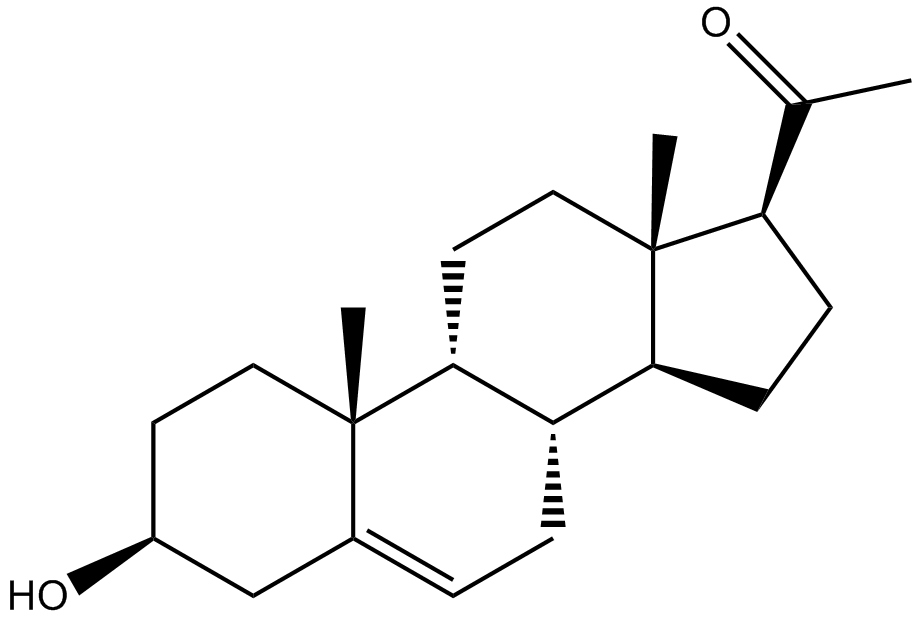
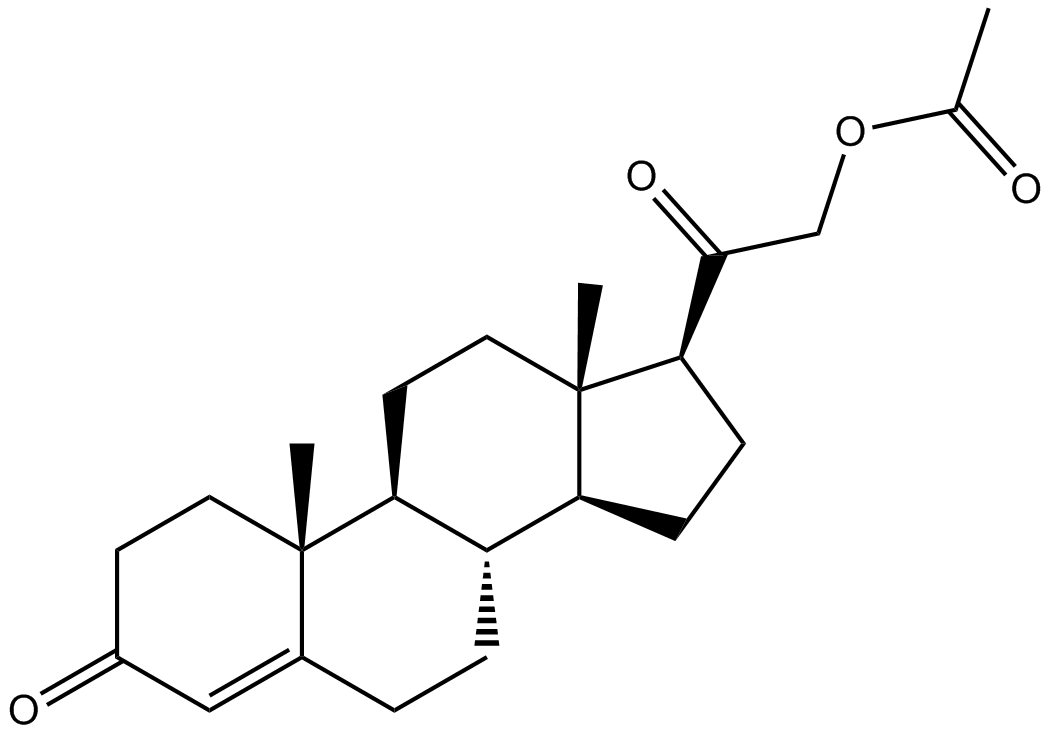
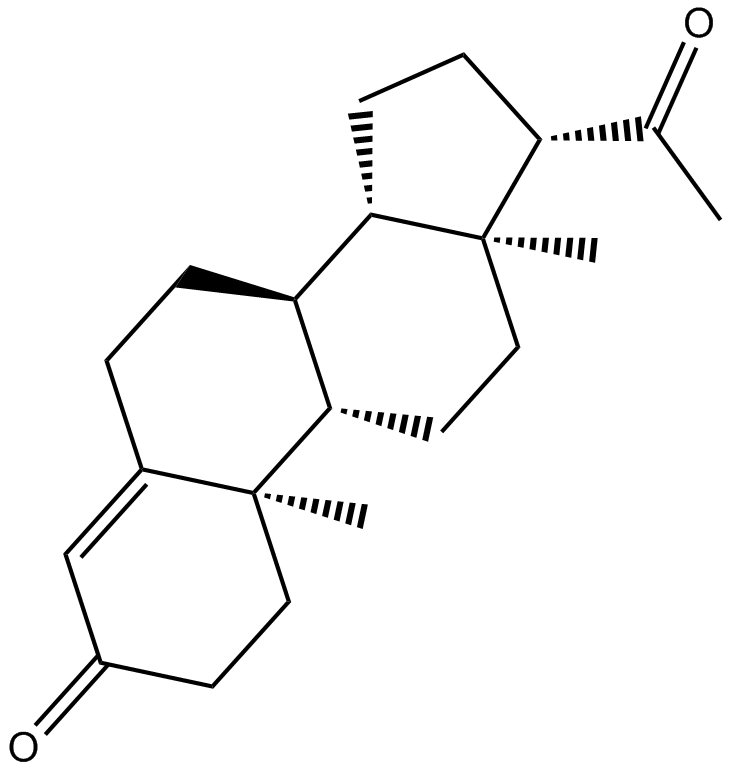
| Chemical Name | (8S,9S,10R,13S,14S,17S)-17-acetyl-10,13-dimethyl-1,2,6,7,8,9,11,12,14,15,16,17-dodecahydrocyclopenta[a]phenanthren-3-one |
| Canonical SMILES | C[C@](CC1)([C@@H](CC2)[C@H](CC3)[C@H]1[C@@](C)(CC1)C3=CC1=O)[C@H]2C(C)=O |
| Shipping Condition | Small Molecules with Blue Ice, Modified Nucleotides with Dry Ice. |
| General tips | We do not recommend long-term storage for the solution, please use it up soon. |
Quality Control & MSDS
- View current batch:
Chemical structure