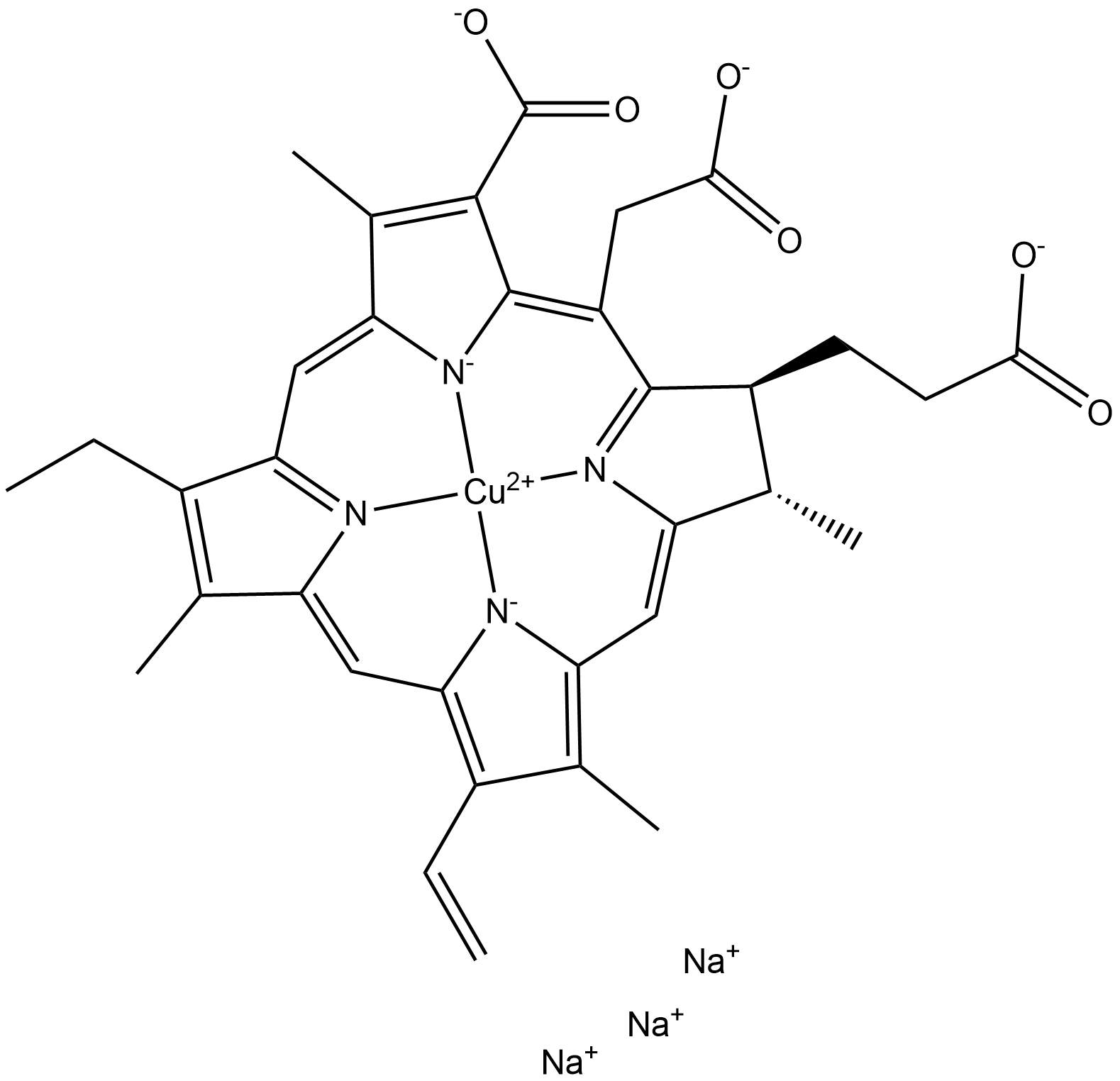
Chlorophyllin (sodium copper salt)
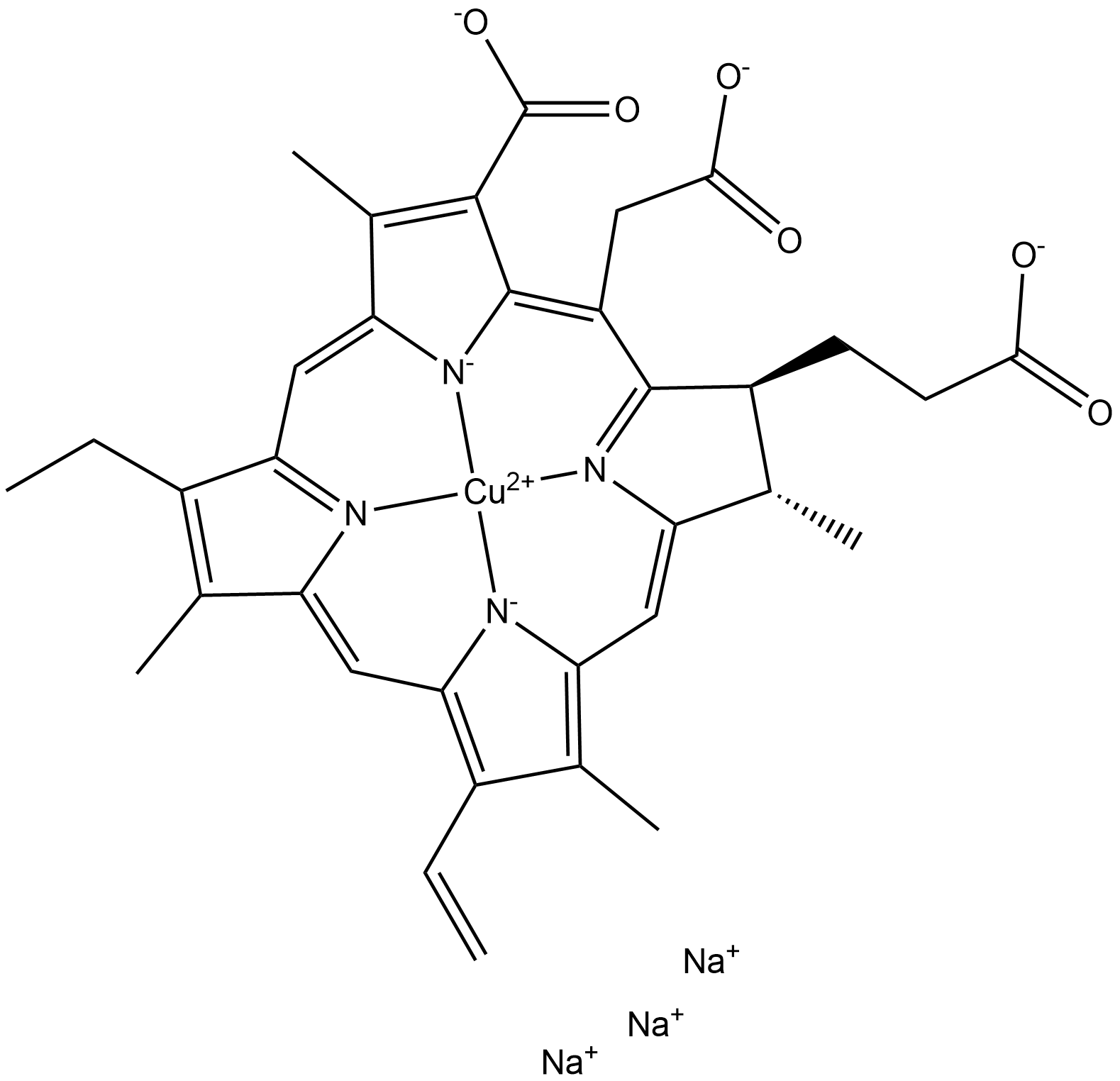
Chlorophyllin (sodium copper salt) (CAS No.: 11006-34-1) is a semi synthetic, water soluble chlorophyll derivative and metal porphyrin like research compound broadly classified as an antioxidant and antimutagenic small molecule for experimental use in toxicology, chemical biology, and early stage drug discovery workflows focused on oxidative stress and xenobiotic damage responses. Derived from plant chlorophyll through saponification and copper substitution processes, this pigment based molecule is commonly investigated as a functional scavenger of reactive oxygen species and electrophilic intermediates, with reported mechanistic relevance to free radical quenching, modulation of redox sensitive signaling networks, and reduction of mutagen associated macromolecular injury, while additional preclinical observations indicate potential support of hematopoietic and platelet related biological processes in model systems. In the current research landscape, chlorophyllin is primarily positioned in phenotypic assay programs rather than single target optimization, and published evidence generally supports pathway level effects involving oxidative stress defense, phase associated detoxification responses, and suppression of DNA damaging adduct formation, whereas definitive high affinity single protein target annotation remains limited and context dependent across assay platforms. Consistent with this profile, in vitro characterization is typically described qualitatively, with bioactivity often observed from micromolar to higher micromolar concentration windows depending on cell type, stressor identity, and endpoint selection, and with potency metrics such as IC50 or EC50 not uniformly established under standardized cross study conditions. Typical biomedical research applications include use in cell based models of oxidative injury, mutagen exposure, and inflammatory stress, as well as exploratory in vivo studies evaluating systemic redox biomarkers and tissue protection signatures under controlled laboratory conditions, and the concentrations or doses used in experiments typically depend on specific experimental designs and research objectives.
| Storage | -20°C for 3 years |
| M.Wt | 724.15 |
| Cas No. | 11006-34-1 |
| Formula | C34H31CuN4Na3O6 |
| Canonical SMILES | O=C(O[Na])CC1=C(C(C(O[Na])=O)=C(C)C2=CC(C(CC)=C3C)=[N]4C3=CC5=C(C=C)C(C)=C6[N-]75)[N-]2[Cu+2]47[N](C8=C6)=C1C(C8C)CCC(O[Na])=O |
| Shipping Condition | Small Molecules with Blue Ice, Modified Nucleotides with Dry Ice. |
| General tips | We do not recommend long-term storage for the solution, please use it up soon. |
Quality Control & MSDS
- View current batch:
Chemical structure